
Hunt research information, draw odds, strategies for success and much more when it comes to Oregon elk and antelope

Item | Hunting license |
|---|---|
Resident | $39 |
Nonresident | $193 |
Item | Youth hunting license |
Resident | $10 |
Nonresident | $10 |
Item | Application fee/per species |
Resident | $10 |
Nonresident | $10 |
Item | *Elk (controlled or general) |
Resident | $56 |
Nonresident | $660 |
Item | *Antelope |
Resident | $58 |
Nonresident | $443 |
Item | Resident | Nonresident |
|---|---|---|
Hunting license | $39 | $193 |
Youth hunting license | $10 | $10 |
Application fee/per species | $10 | $10 |
*Elk (controlled or general) | $56 | $660 |
*Antelope | $58 | $443 |
Unit | 56 - Wenaha |
|---|---|
Trophy potential | 360"+ |
Harvest success | Archery: 40% |
Resident points to draw | 85% with 23 |
Nonresident points to draw | 100% with 27 |
Unit | 54 - Mt Emily |
Trophy potential | 350"+ |
Harvest success | Archery: 52% |
Resident points to draw | 55% with 20 |
Nonresident points to draw | 20% with 26 |
Unit | 55 - Walla Walla |
Trophy potential | 340"+ |
Harvest success | Archery: 56% |
Resident points to draw | 25% with 19 |
Nonresident points to draw | N/A |
Unit | 37 - Ochoco |
Trophy potential | 340"+ |
Harvest success | Archery: 12% |
Resident points to draw | 81% with 2 |
Nonresident points to draw | 67% with 3 |
Unit | 57 - Sled Spring |
Trophy potential | 330"+ |
Harvest success | Archery: 21% |
Resident points to draw | 25% with 7 |
Nonresident points to draw | 100% with 12 |
Unit | 58 - Chesnimnus |
Trophy potential | 320"+ |
Harvest success | Archery: 19% |
Resident points to draw | 81% with 1 |
Nonresident points to draw | 47% with 4 |
Unit | 59 - Snake River |
Trophy potential | 330”+ |
Harvest success | Archery: 12% |
Resident points to draw | 100% with 0 |
Nonresident points to draw | 57% with 1 |
Unit | Trophy potential | Harvest success | Resident points to draw | Nonresident points to draw |
|---|---|---|---|---|
56 - Wenaha | 360"+ | Archery: 40% | 85% with 23 | 100% with 27 |
54 - Mt Emily | 350"+ | Archery: 52% | 55% with 20 | 20% with 26 |
55 - Walla Walla | 340"+ | Archery: 56% | 25% with 19 | N/A |
37 - Ochoco | 340"+ | Archery: 12% | 81% with 2 | 67% with 3 |
57 - Sled Spring | 330"+ | Archery: 21% | 25% with 7 | 100% with 12 |
58 - Chesnimnus | 320"+ | Archery: 19% | 81% with 1 | 47% with 4 |
59 - Snake River | 330”+ | Archery: 12% | 100% with 0 | 57% with 1 |
Unit | 46 - Murderers Creek |
|---|---|
Trophy potential | 320"+ |
Harvest success | Archery: 12% |
Resident points to draw | 100% with 0 |
Nonresident points to draw | 100% with 2 |
Unit | 47 - Northside |
Trophy potential | 310”+ |
Harvest success | Archery: 14% |
Resident points to draw | 100% with 0 |
Nonresident points to draw | 69% with 1 |
Unit | 48 - Heppner |
Trophy potential | 320”+ |
Harvest success | Archery: 18% |
Resident points to draw | 82% with 3 |
Nonresident points to draw | 100% with 4 |
Unit | 49 - Ukiah |
Trophy potential | 310”+ |
Harvest success | Archery: 16% |
Resident points to draw | 100% with 2 |
Nonresident points to draw | 100% with 2 |
Unit | 50 - Desolation |
Trophy potential | 310”+ |
Harvest success | Archery: 10% |
Resident points to draw | 100% with 0 |
Nonresident points to draw | 100% with 0 |
Unit | 51 - Sumpter |
Trophy potential | 310”+ |
Harvest success | Archery: 17% |
Resident points to draw | 100% with 0 |
Nonresident points to draw | 91% with 1 |
Unit | 52 - Starkey |
Trophy potential | 320”+ |
Harvest success | Archery: 17% |
Resident points to draw | 100% with 0 |
Nonresident points to draw | 95% with 2 |
Unit | 53 - Catherine Creek |
Trophy potential | 300”+ |
Harvest success | Archery: 18% |
Resident points to draw | 100% with 0 |
Nonresident points to draw | 79% with 2 |
Unit | 59 - Snake River |
Trophy potential | 330”+ |
Harvest success | Archery: 12% |
Resident points to draw | 100% with 0 |
Nonresident points to draw | 100% with 2 |
Unit | 65 - W. Beulah |
Trophy potential | 300”+ |
Harvest success | Archery: 14% |
Resident points to draw | 100% with 0 |
Nonresident points to draw | 100% with 1 |
Unit | 66 - N. Malheur River |
Trophy potential | 290”+ |
Harvest success | Archery: 14% |
Resident points to draw | 100% with 0 |
Nonresident points to draw | 42% with 2 |
Unit | 72 - Silvies |
Trophy potential | 310”+ |
Harvest success | Archery: 6% |
Resident points to draw | 100% with 0 |
Nonresident points to draw | 83% with 1 |
Unit | Trophy potential | Harvest success | Resident points to draw | Nonresident points to draw |
|---|---|---|---|---|
46 - Murderers Creek | 320"+ | Archery: 12% | 100% with 0 | 100% with 2 |
47 - Northside | 310”+ | Archery: 14% | 100% with 0 | 69% with 1 |
48 - Heppner | 320”+ | Archery: 18% | 82% with 3 | 100% with 4 |
49 - Ukiah | 310”+ | Archery: 16% | 100% with 2 | 100% with 2 |
50 - Desolation | 310”+ | Archery: 10% | 100% with 0 | 100% with 0 |
51 - Sumpter | 310”+ | Archery: 17% | 100% with 0 | 91% with 1 |
52 - Starkey | 320”+ | Archery: 17% | 100% with 0 | 95% with 2 |
53 - Catherine Creek | 300”+ | Archery: 18% | 100% with 0 | 79% with 2 |
59 - Snake River | 330”+ | Archery: 12% | 100% with 0 | 100% with 2 |
65 - W. Beulah | 300”+ | Archery: 14% | 100% with 0 | 100% with 1 |
66 - N. Malheur River | 290”+ | Archery: 14% | 100% with 0 | 42% with 2 |
72 - Silvies | 310”+ | Archery: 6% | 100% with 0 | 83% with 1 |
Unit | 10 - Saddle Mt |
|---|---|
Trophy potential | 300"+ |
Harvest success | Archery (general): 13% |
Resident points to draw | N/A |
Nonresident points to draw | N/A |
Unit | 14 - Trask |
Trophy potential | 290"+ |
Harvest success | Archery (general): 13% |
Resident points to draw | N/A |
Nonresident points to draw | N/A |
Unit | 25 - Sixes |
Trophy potential | 290"+ |
Harvest success | Archery (general): 33% |
Resident points to draw | N/A |
Nonresident points to draw | N/A |
Unit | 26 - Powers |
Trophy potential | 290"+ |
Harvest success | Archery: 28% |
Resident points to draw | 100% with 3 |
Nonresident points to draw | 100% with 18 |
Unit | 24 - Tioga |
Trophy potential | 280"+ |
Harvest success | Archery (general): 14% |
Resident points to draw | N/A |
Nonresident points to draw | N/A |
Unit | 27 - Chetco |
Trophy potential | 280"+ |
Harvest success | Archery (general): 18% |
Resident points to draw | N/A |
Nonresident points to draw | N/A |
Unit | Trophy potential | Harvest success | Resident points to draw | Nonresident points to draw |
|---|---|---|---|---|
10 - Saddle Mt | 300"+ | Archery (general): 13% | N/A | N/A |
14 - Trask | 290"+ | Archery (general): 13% | N/A | N/A |
25 - Sixes | 290"+ | Archery (general): 33% | N/A | N/A |
26 - Powers | 290"+ | Archery: 28% | 100% with 3 | 100% with 18 |
24 - Tioga | 280"+ | Archery (general): 14% | N/A | N/A |
27 - Chetco | 280"+ | Archery (general): 18% | N/A | N/A |
Unit | 70 - Beatys Butte |
|---|---|
Trophy potential | 80"+ |
Harvest success | Archery (HM): 45% |
Resident points to draw | 88% with 17 |
Nonresident points to draw | 100% with 21 |
Unit | 74 - Warner |
Trophy potential | 80"+ |
Harvest success | Archery: 68% |
Resident points to draw | 66% with 12 |
Nonresident points to draw | 100% with 20 |
Unit | 68 - Whitehorse |
Trophy potential | 80"+ |
Harvest success | Rifle: 88% |
Resident points to draw | 97% with 18 |
Nonresident points to draw | 33% with 25 |
Unit | 71 - Juniper |
Trophy potential | 80"+ |
Harvest success | Archery: 100% |
Resident points to draw | 88% with 17 |
Nonresident points to draw | 100% with 21 |
Unit | 69 - Steens Mt |
Trophy potential | 80"+ |
Harvest success | Archery: 48% |
Resident points to draw | 93% with 11 |
Nonresident points to draw | 100% with 17 |
Unit | 73 - Wagontire |
Trophy potential | 80"+ |
Harvest success | Archery: 50% |
Resident points to draw | 100% with 9 |
Nonresident points to draw | 100% with 10 |
Unit | 72 - Silvies |
Trophy potential | 75"+ |
Harvest success | Rifle: 75% |
Resident points to draw | 20% with 15 |
Nonresident points to draw | 33% with 17 |
Unit | 36 - Maury |
Trophy potential | 75"+ |
Harvest success | Archery: 29% |
Resident points to draw | 69% with 3 |
Nonresident points to draw | 20% with 3 |
Unit | 76 - Silver Lake |
Trophy potential | 75"+ |
Harvest success | Muzzleloader: 14% |
Resident points to draw | 23% with 5 |
Nonresident points to draw | 100% with 6 |
Unit | 75 - Interstate |
Trophy potential | 75"+ |
Harvest success | Archery: 28% |
Resident points to draw | 100% with 0 |
Nonresident points to draw | 100% with 0 |
Unit | 66 - Malheur River |
Trophy potential | 75”+ |
Harvest success | Archery: 27% |
Resident points to draw | 52% with 2 |
Nonresident points to draw | 100% with 4 |
Unit | Trophy potential | Harvest success | Resident points to draw | Nonresident points to draw |
|---|---|---|---|---|
70 - Beatys Butte | 80"+ | Archery (HM): 45% | 88% with 17 | 100% with 21 |
74 - Warner | 80"+ | Archery: 68% | 66% with 12 | 100% with 20 |
68 - Whitehorse | 80"+ | Rifle: 88% | 97% with 18 | 33% with 25 |
71 - Juniper | 80"+ | Archery: 100% | 88% with 17 | 100% with 21 |
69 - Steens Mt | 80"+ | Archery: 48% | 93% with 11 | 100% with 17 |
73 - Wagontire | 80"+ | Archery: 50% | 100% with 9 | 100% with 10 |
72 - Silvies | 75"+ | Rifle: 75% | 20% with 15 | 33% with 17 |
36 - Maury | 75"+ | Archery: 29% | 69% with 3 | 20% with 3 |
76 - Silver Lake | 75"+ | Muzzleloader: 14% | 23% with 5 | 100% with 6 |
75 - Interstate | 75"+ | Archery: 28% | 100% with 0 | 100% with 0 |
66 - Malheur River | 75”+ | Archery: 27% | 52% with 2 | 100% with 4 |
Note: The application deadline in Oregon for all species is May 15, 2026, at 11:59 p.m. PT, and all applications must be submitted online or at a licensed sales agent.
As far as elk and antelope are concerned, the only big change worth noting for 2026 is an increase in tag and license costs for both residents and nonresidents. There are a few new hunts for bull elk and antelope in 2026 as well.
Remember that GOHUNT has Draw Odds for all female species.
To view more important information, including a state overview of Oregon’s rules/regulations, the draw system, draw odds, and license fees, go to the Oregon State Profile. It also includes an interactive map where you can research unit boundaries and data on a unit-by-unit basis.
Note: Like other preference point states, there is point creep in the more popular units of the state. What this means is that if you see a unit that was drawn last year at four points, it's possible that it may require five points this year due to the fact that there are more applicants than permits available. It helps to review the detailed draw odds pages, where you can see five years' worth of draw data to help evaluate the likelihood of point creep.
* Tag fees are only required if you are successful in the draw. You have the option to purchase the tag if successful in the draw.
2026
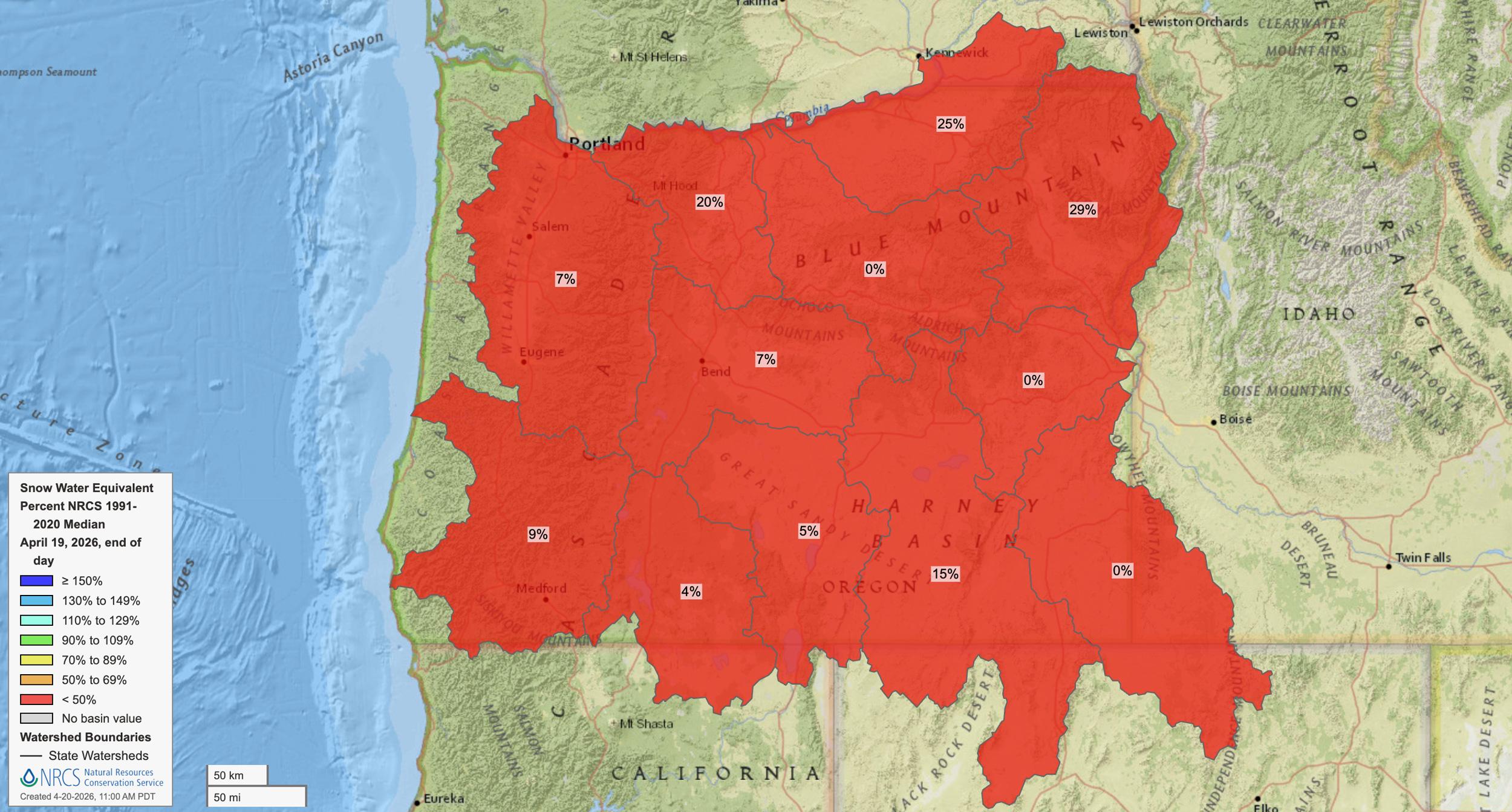
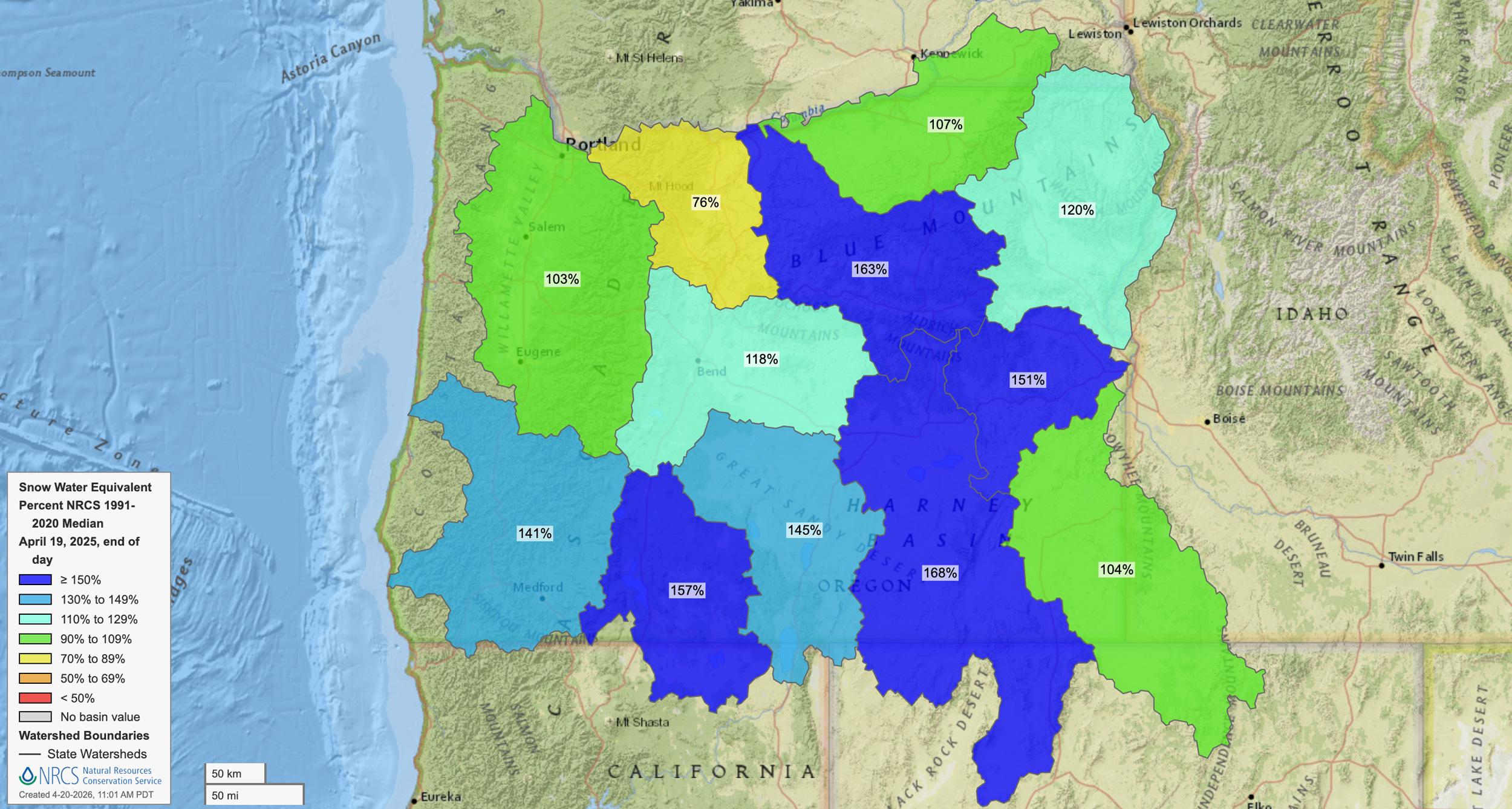
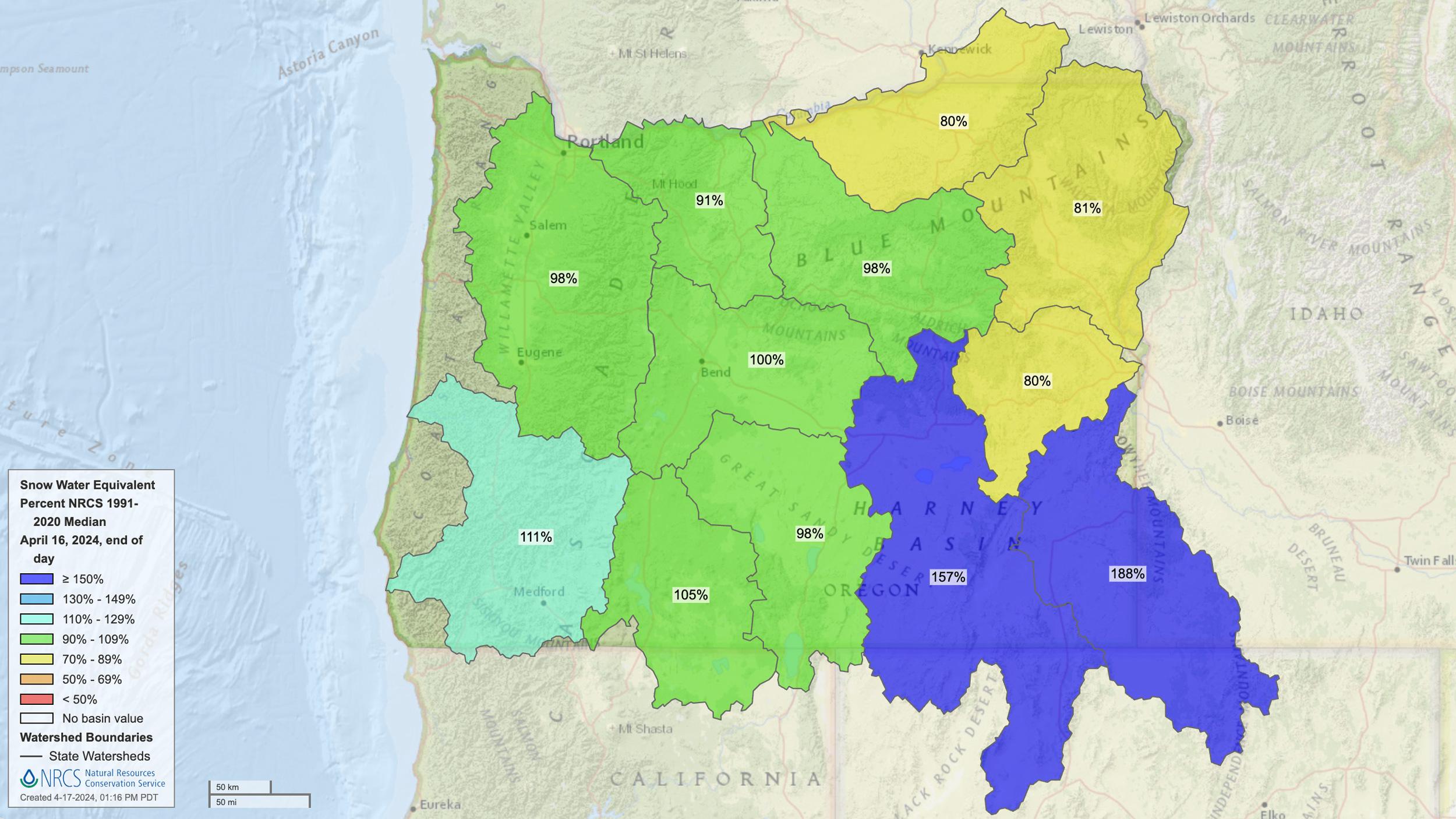
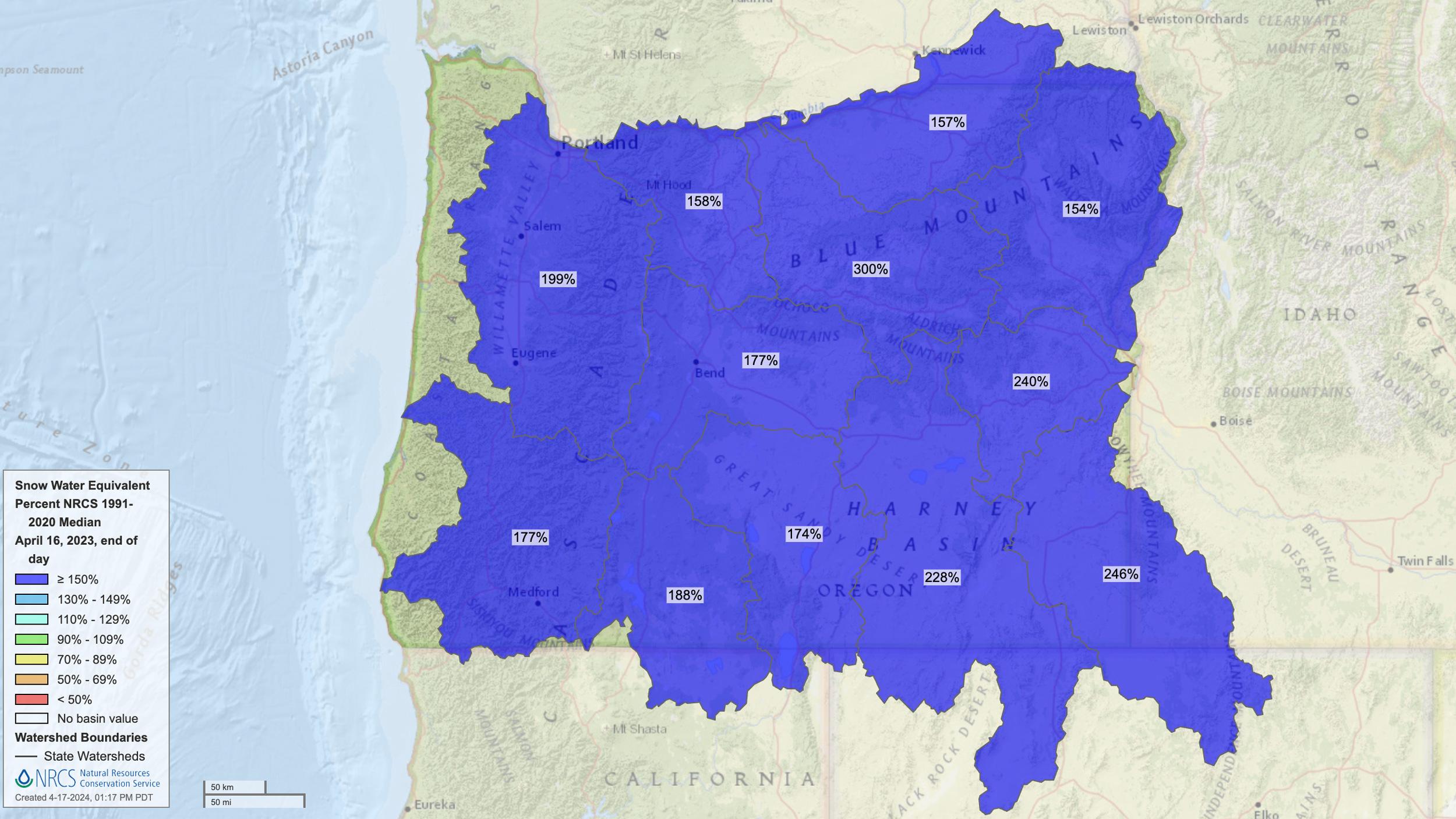
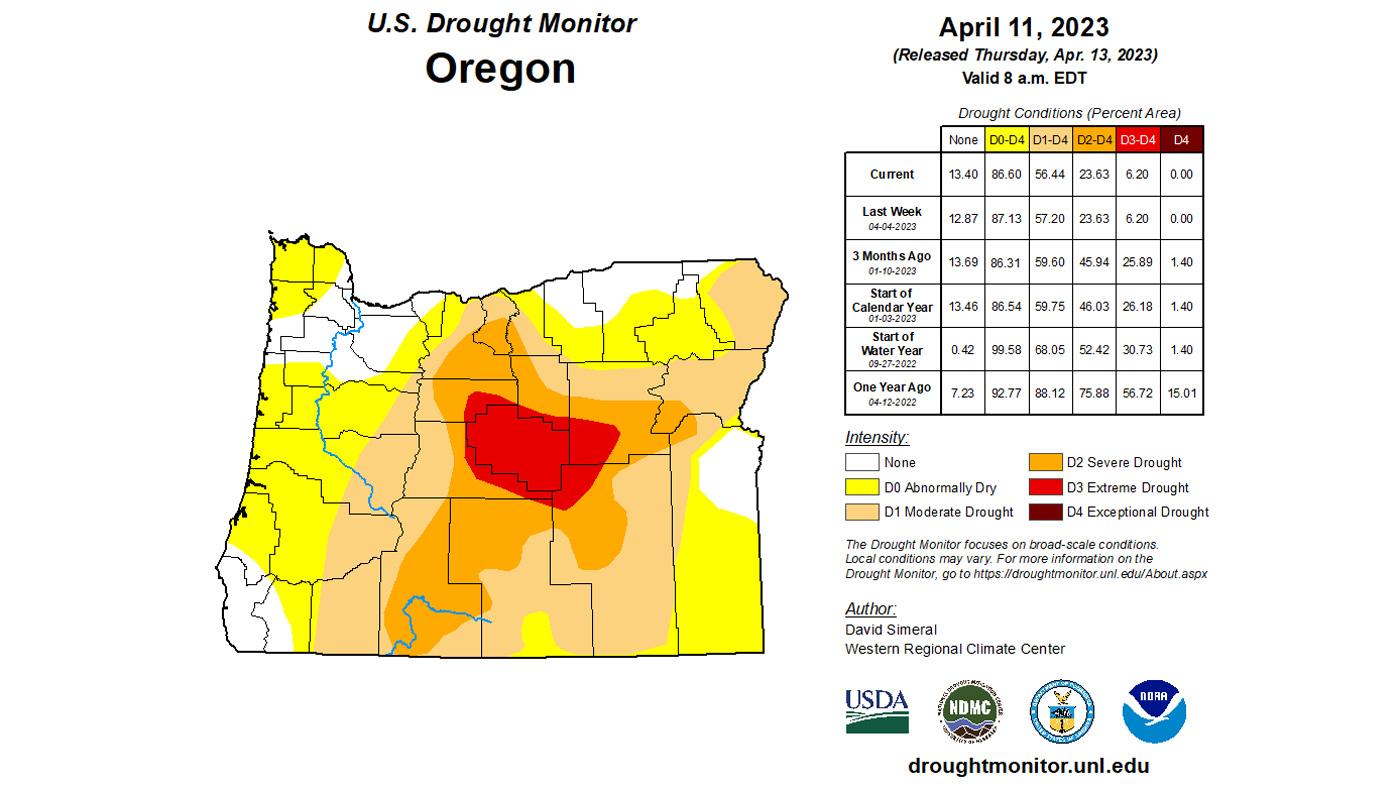
For 2026, Oregon experienced one of the lowest snow water equivalent (SWE) levels on record. SWE measures the amount of water stored in the snowpack and is a key indicator of how much runoff will be available in the spring and summer. By early February 2026, Oregon’s statewide average SWE was only about 2.9 inches, the lowest recorded since modern SNOTEL records began in the early 1980s and nearly 30% lower than the previous record low in 2015. Much of the state’s snowpack hovered around 30–55% of normal, with many basins reporting less than 50% of the historical median. Warm winter storms caused much of the precipitation to fall as rain instead of snow, while dry periods limited accumulation at higher elevations. As a result, a widespread “snow drought” developed across Oregon, leaving the state with historically poor snowpack conditions for the 2026 water year.
2025
2024
2023
2026
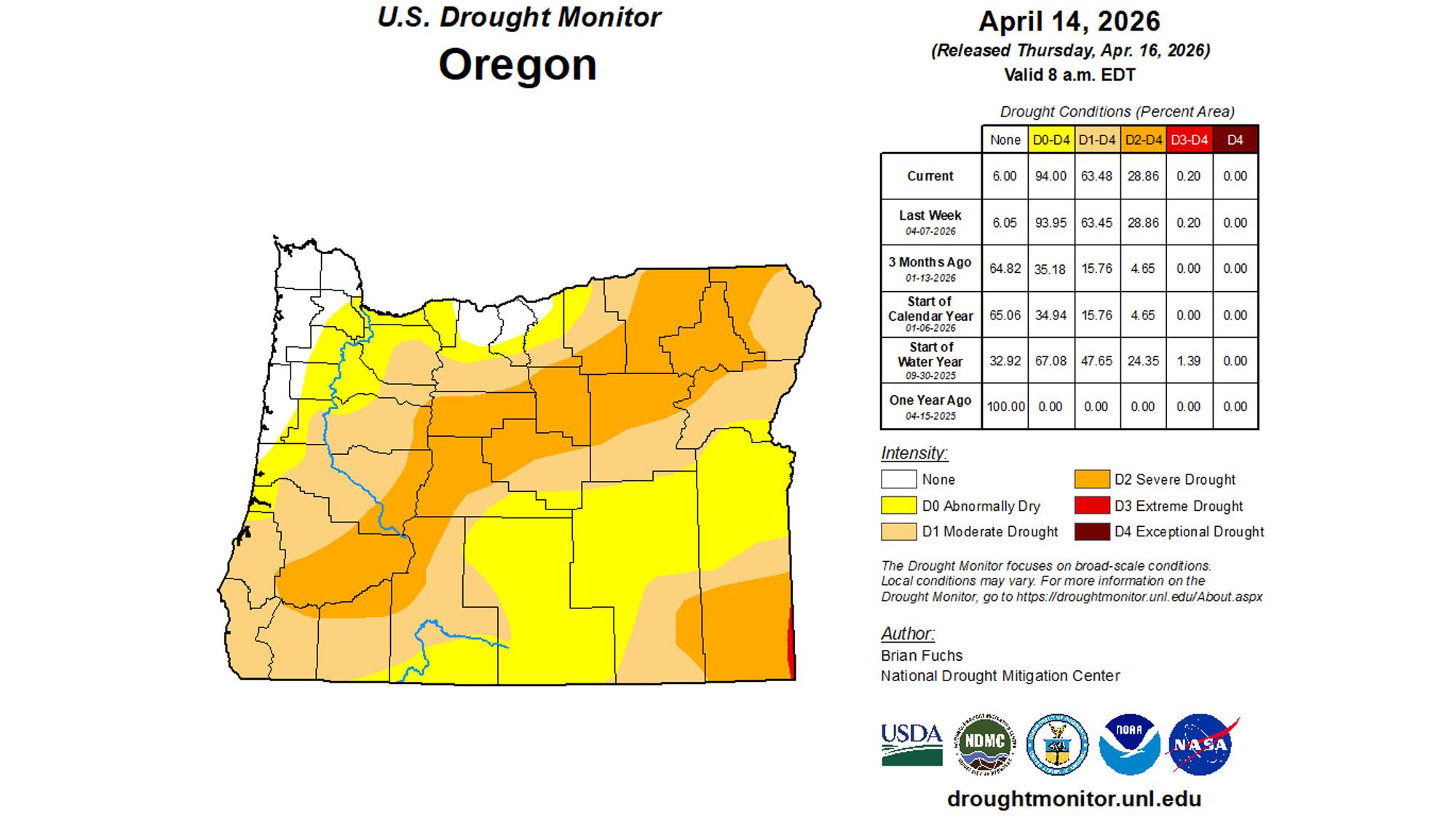
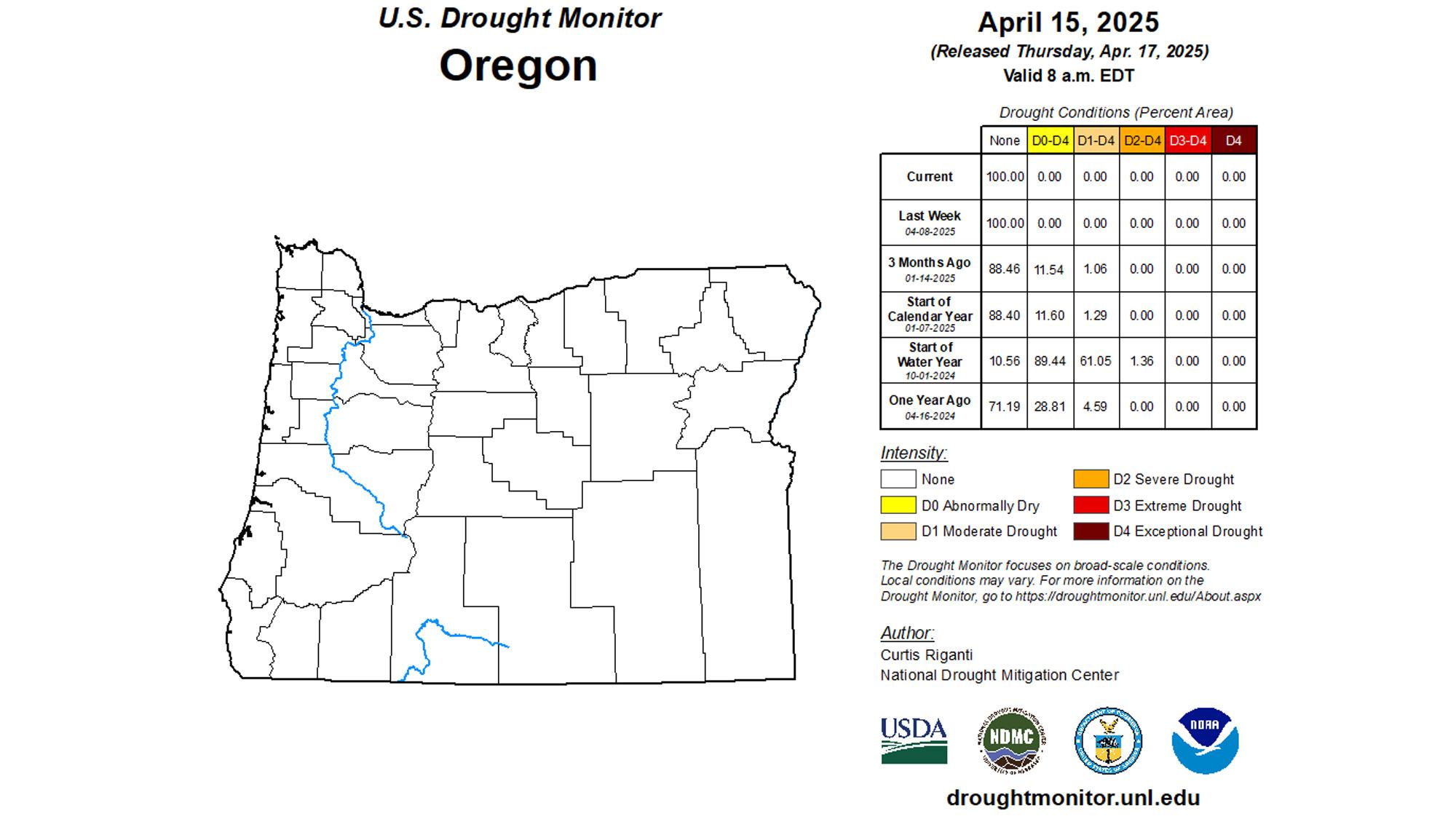
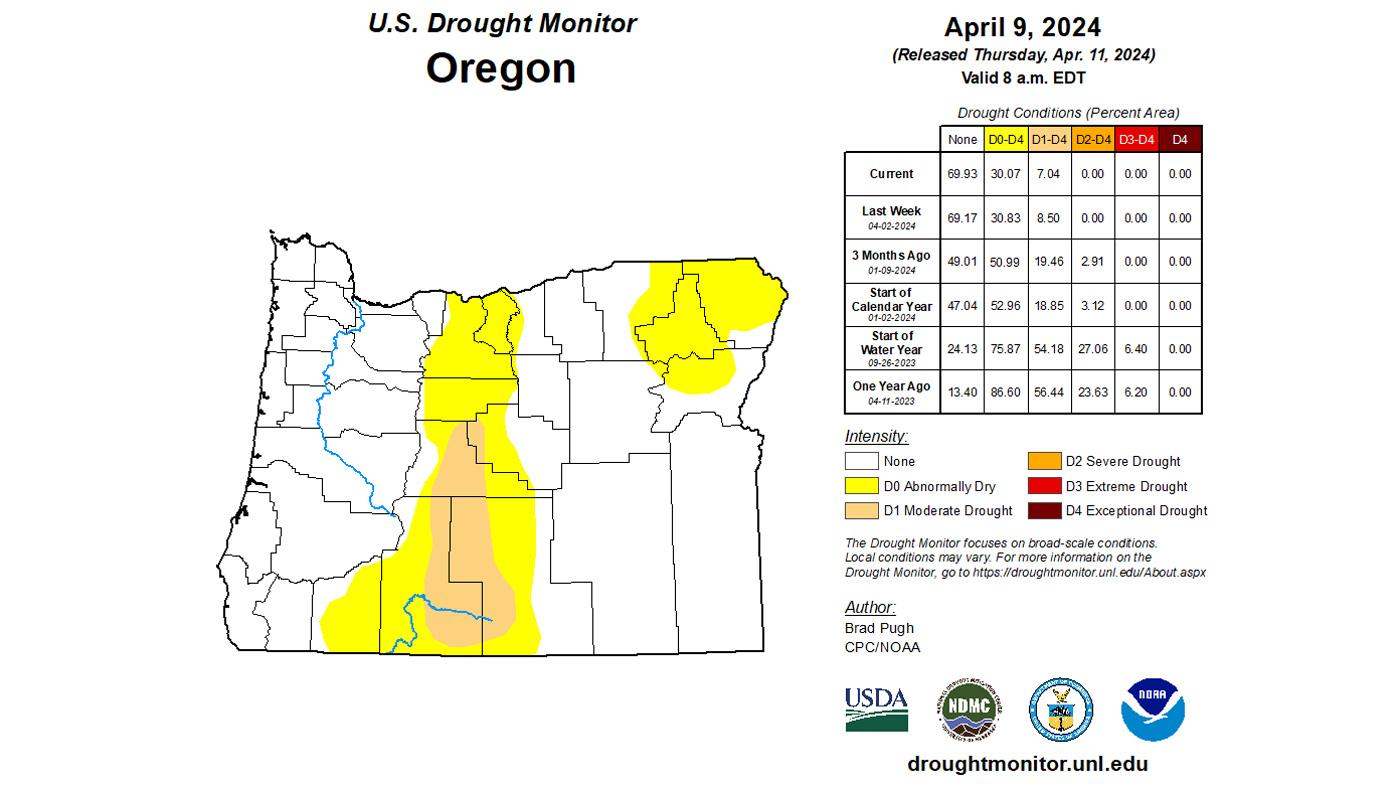
The 2026 drought map for Oregon shows that much of the state was experiencing dry conditions during the winter and early spring. The southern and central portions of the state are experiencing little to no drought currently, and this is something to keep an eye on when applying. With the current lack of snowpack in Oregon, I would expect this map to worsen as we approach summer, even with good spring rainfall.
2025
2024
2023
Oregon’s draw for elk and antelope is a preference point hybrid system. There is both a preference point and a random draw portion. Out of the total tags, 75% are allocated to the highest point holders who apply for any given hunt, and the other 25% are randomly allocated regardless of points. On the random side of that draw, every applicant is on a level playing field for those tags.
Note: if there are only three or less for any particular hunt, those will be given to the highest point applicants with no random tag available.
As nonresidents, is Oregon a good state to apply to? What are the tag splits? This is where Oregon gets tricky, as nonresidents are only allocated a maximum of 3% of the antelope tags and a maximum of 5% of the elk tags. It gets even worse: out of those tag percentages, 2.5% of these are allocated prior to the main draw in the guides and outfitters program. At best, there are only 2% of the elk tags and .5% of the antelope tags that can be allocated to nonresidents in the main draw, and, for the good hunts, there are so few tags that there are no tags randomly allocated. If you are not a high-point holder, the good tags in Oregon are essentially off-limits to nonresidents.
Oregon is also relatively expensive for a nonresident adult to apply to. As previously stated, you must purchase the $193 hunting license and then pay the $10 application fee per species. In our opinion, the juice may not be worth the squeeze unless you live in an adjacent state and are willing to research the odds and hunts available, and know what you are getting into before starting down the road of the Oregon application process.
If applicants wish to build points only, then they can purchase a “point saver” option when applying for a draw. If you miss the main draw, then preference points can be purchased from July 1 through Nov 30.
Oregon will allow applicants to enter five hunt choices. Every applicant's first choice is considered before moving to an applicant's second choice, so on and so forth. Preference points are only purged if an applicant draws their first choice. There is no waiting period to reapply for elk or antelope if you drew a tag the previous year. Be sure to take a look at the second choice draw odds to see what tags might be available after all first choices have been awarded.
Oregon will allow group applications for elk and antelope of any size. A group application will have their points averaged and will round up to the next whole number if the average is .51 or above, and down to the whole number if the average is .50 or below. A group application is treated as a single application where, if selected, all applicants will receive a tag, provided there are enough tags to satisfy the size of the group. If there are not enough tags, no one on that application will receive a tag.
If you are successful in drawing a tag, you have up until the day before the earliest hunt starts to purchase the tag. Once you have purchased the tag, you cannot return it for a refund. If you draw your first choice, your preference points will be purged, so make sure you actually want the permit you apply for.
In addition to the regular controlled hunt drawing, Oregon offers a separate draw for hunts that they call premium hunts. This is a completely separate hunt drawing that allows tag holders to hunt extended season dates with any weapon. These hunts are 100% randomly drawn each year, and there are no preference or bonus points attached to the application. There are no party applications and no resident or nonresident quotas. The season dates for the lucky tag holders are Aug. 1 to Nov. 30 each year. Standard application fees exist, and the applicant can apply for five different choices on their application. They are only allowed to apply once per species (hunt code).
Oregon continues to support one of the largest elk populations in the West in 2025, with an estimated herd of roughly 130,000 animals statewide, split between Roosevelt elk in the coastal and western Cascade regions and Rocky Mountain elk across eastern Oregon. Overall, elk numbers are considered stable to slightly increasing in many areas, with some eastern herds exceeding management objectives while others remain below due to habitat limitations and pressure. Recent reports indicate that elk came through recent winters in good condition, with average to above-average calf recruitment in several units, contributing to steady herd performance. However, population trends can vary widely by unit, as some regions are seeing slow declines or lower bull ratios, while others continue to provide strong hunting opportunities and consistent harvest success. Overall, Oregon’s elk resource remains healthy and widely distributed, offering a mix of opportunity and quality depending on location and tag type.
The Oregon Department of Fish and Wildlife has historically prioritized hunting opportunity over trophy quality. For nonresidents seeking a true trophy-class bull, Oregon generally isn’t the top choice. The few units capable of producing bulls of that caliber offer very limited tag numbers, and the chances of drawing one as a nonresident are extremely low. Because of that, Oregon isn’t typically considered a must-apply state.
For nonresident applicants new to the point system for Rocky Mountain elk in Oregon, opportunities are limited. The best hunts in the state offer very few tags, and the point creep is so significant that you may never catch up. Be aware of that as you review the hit list and associated odds.
Nevertheless, Oregon still provides opportunities, especially for archery hunting, where tags are attainable with little to no points.
Rocky Mountain elk
Residents with no points could have drawn 41 different hunts. Out of those, 21 were archery, 8 muzzleloader hunts, and the rest were rifle hunts. Pay close attention when you apply to make sure you are selecting a spike-only option, as that is a common mistake when applying for Oregon elk.
Roosevelt elk
Hunters looking to pursue Roosevelt bulls had a total of eleven hunt options available, including at least one for each weapon type. Units 10 and 26 had the highest success rates, with harvest percentages ranging from 15% to 20%. In my opinion, the most important factor in these Roosevelt elk units is the amount of public land and overall access. Be sure to thoroughly research those aspects before applying to the draw.
Rocky Mountain elk
There are limited options if you just want to give Oregon elk hunting a try. Applicants looking at Rocky Mountain elk hunting opportunities with zero points might research Units 50 and 39, which might be options to get in the field, but building a point or two might be a better option.
Roosevelt elk
Nonresidents who are interested in rifle hunting Roosevelt bulls might consider Units 10 and 24. Harvest success is good for those, and the public land percentages are 27% and 35%.
Keep in mind, there are units that are OTC for Roosevelt elk. Nonresidents can just buy a license and a tag, go hunting, and generally get into elk. This might be a really good option for someone who doesn’t have a tag yet this year and wants to experience a different type of hunt elk.
Residents holding five to six points can draw nearly any tag they want, with only 13 hunts out of reach. For archery-controlled hunts, Units 48 and 62 both offer the highest harvest success rates of 18%. Meanwhile, Unit 67 is a solid muzzleloader option that can likely be drawn and posted a 32% success rate.
With 100% odds at five points, the best options are rifle hunts in Units 49, 48, 52, 57, 61, 65, 66, 58, and 46. In my opinion, this is a great spot to be as a resident. There is always a chance for an above-average bull to come out of any of the units mentioned above.
There are 16 total Roosevelt hunt options with five to six points, with the best being Unit 26 for archery, Units 14 and 24 for muzzleloader, and the rifle hunts in Units 26 and 15/18.
Nonresident bowhunters have many options, but will be giving up several points to draw them. This point level is tough; you are either above what it takes to draw most units, but still a long way off for the top units. The best options are likely Units 52, 48, 58, and 60, which required two to five points last year.
The best muzzleloader hunts for this point range are 48 and 60 for trophy bulls up to 320’’+. These units will also take under 5 points to draw, but likely the best options in that point range for that weapon type.
Rifle hunters should consider Units 36, 46, 48, 52, 58, and 61. These units can all be drawn at that point level and are good options for a rifle. Plenty of public land, and good opportunities at six-point bulls.
If you are interested in burning your points on a Roosevelt elk hunt, there are only a few hunts you cannot draw. Those that can’t be drawn are the archery hunt in Unit 26 and the rifle hunts in Units 23, 25, and 26. Some of the better options for your points are rifle hunts in 15/18 and 27.
Every archery hunt could be drawn except for the big three: 54, 55, and 56. Those required between 20 and 25 points to draw in 2026. If you have 14 points or fewer, and decide you do not want to continue to play the point game, Unit 57 was drawn with 12 points with decent harvest success.
All muzzleloader hunts were available with 10 points last year. Rifle hunters might consider Units 35, 37, 46, 48, and 59. There are good elk populations in those units and decent harvest success.
Rifle hunts 54, 55, and 56 all still take 21 to 27 points for 2026.
Archery elk hunters considering Units 54 and 56 should know that those took 27 and 31 points, respectively.
Rifle hunters should consider Unit 37, which was drawn with 11 points. Rifle hunts in 54 and 56 had hunts that took 29 and 27 points. One of the better options is Unit 59, which requires 14 points but is extremely steep and rugged, often a better unit for a drop-camp situation or jet-boat access.
Oregon’s pronghorn antelope herds are relatively small compared to neighboring Western states, but they remain stable and well-managed by the Oregon Department of Fish and Wildlife. Most of the population is concentrated in the high desert of eastern Oregon, particularly in units such as Hart Mountain and the Warner Valley, where habitat conditions tend to support stable herd numbers. The state manages antelope with a strong emphasis on controlled opportunity, meaning nearly all hunts are limited entry and require drawing a tag. While this makes tags difficult to obtain—especially for nonresidents—it also helps maintain balanced herd health and decent buck quality. For hunters who do draw a tag, success rates are typically high due to good visibility and relatively open terrain, making Oregon a quality experience even if opportunities are limited.
For nonresidents, you only have a chance at 3% of the tags available, and good tags will take 13 to 25 years to draw. However, if you are already buying the nonrefundable hunting license, you might as well apply for antelope or purchase a point during the point-buying period.
Units 77 and 75 are the only archery antelope hunts that had 100% odds with zero points. There were six other units that had double-digit odds, including Units 32, 33, 36, 64, 66, and 67. Unit 75 does, however, include a lot of private land. Applicants can consider applying for the top trophy units and hope to get lucky in the random draw or explore the hunts listed above.
Muzzleloader and rifle hunters have no guarantee to draw, and it will all come down to the randomly allocated tags. Your best random odds for a muzzleloader tag were 6.9%, and your best odds for a random rifle tag were 1.5%.
Unit 75 archery had 100% odds with no points, and harvest success over the last three years ranged from 13% to 28%. There was a total of two archery hunts last year, with random odds at zero points in Units 35 and 64. Unit 64 had a 3.5% chance at zero points.
Units 76 and 77 were the only two hunts that offered a random chance to nonresident muzzleloader hunters, and only five of the rifle hunts had random odds; those were 45, 48, 38, 47, and 72. The Unit 45 rifle hunt had the best random odds at .89%, but heavy private land at 85%.
Archery hunts in Units 36, 66 and 67 are all good options in the five-to-six-point range. Muzzleloader hunters have two good options to choose from between 76 and 77. Rifle hunters are still at a random level with five to six points, and the best odds are in Unit 45 with 1.8%.
Six archery antelope hunts could be drawn, including Units 36 and 66, which are the best options for bowhunters in that range.
Rifle hunters can consider applying for one of the five units that had a random tag available to nonresidents. Those are Units 38, 45, 47, 48, and 72.
The best options for residents who have waited a decade to possibly draw are the archery hunts in Units 70 (BB), 73 and, possibly, Unit 74, although it’s likely to take 13 to 19 points in 2026. There are also some good muzzleloader hunts to choose from, including Units 35, 69 and, possibly, 73. Rifle hunters — even at 10 points — might need another three to five years or so. At 13 to 16 points, applicants can consider Units 36, 37, 46, 47, 48, 66, 72, 75 and 76/77. Applicants hanging around the 20-point range have all but two hunts to choose from, which are 70 (HM) and 71 (HM).
For 2026, there were all, but two archery hunts that were attainable with 10 points. Unit 70 (HM) and Unit 71 still take about 21 and 17 points to draw, respectively.
Muzzleloader hunters might consider Unit 35 and 76, which were available at 10 points. The other muzzleloader hunts were drawn at the 12- to 18-point levels. Rifle hunters are still behind the point curve at 10 points. Most of your rifle options don't start to open until you reach the 16-point level. The best units in the state still require over 29 points to draw.
Increase tag and license cost for Residents and Non-Residents
New Buck Antelope Hunt (Hunt # 473 Wagontire - 37 total tags issued)
New Bull Elk Hunt (Hunt #241R The Dalles Watershed - 5 total tags issued)
You can apply online here.
The deadline to apply is May 15, 2026, at 11:59 p.m. PT.
Results will be available by June 12, 2026.
If you made an error on your application, corrections can be made up to May 25.
You are required to purchase a hunting license prior to applying.
Applicants do not have to front the cost of the permits they apply for.
If you are successful, you will receive a notification to purchase your tag.
Hunters 17 years old or younger need to have a hunter’s education certificate unless they are ages nine to 15 and enrolled in the youth mentor program.
Oregon elk and antelope draw tags are allocated on a hybrid preference point system.
75% of the tags are allocated to maximum point holders; 25% are randomly allocated with no regard to points.
Points can also be purchased during a separate timeframe from July 1 to Nov. 30.
You cannot apply for a second through fifth choice if you choose to apply for a point saver as your first choice.