
Strategies when applying for all deer species in the state of Oregon

Item | Hunting license |
|---|---|
Resident | $39.00 |
Nonresident | $193.00 |
Item | Youth hunting license |
Resident | $10.00 |
Nonresident | $10.00 |
Item | Application fee/per species |
Resident | $10.00 |
Nonresident | $10.00 |
Item | *Deer (controlled or general) |
Resident | $33.00 |
Nonresident | $500.00 |
Item | Resident | Nonresident |
|---|---|---|
Hunting license | $39.00 | $193.00 |
Youth hunting license | $10.00 | $10.00 |
Application fee/per species | $10.00 | $10.00 |
*Deer (controlled or general) | $33.00 | $500.00 |
Unit | SE-02 Southeast |
|---|---|
Trophy potential | 180”+ |
Harvest success | New Hunt for 2026 |
Resident points to draw in 2026 | N/A |
Nonresidents points to draw in 2026 | N/A |
Unit | CR-01 Crooked River |
Trophy potential | 180”+ |
Harvest success | New Hunt for 2026 |
Resident points to draw in 2026 | N/A |
Nonresidents points to draw in 2026 | N/A |
Unit | SW-01 South Wallowas |
Trophy potential | 180”+ |
Harvest success | New Hunt for 2026 |
Resident points to draw in 2026 | N/A |
Nonresidents points to draw in 2026 | N/A |
Unit | TC-01 Trout Creek |
Trophy potential | 180”+ |
Harvest success | New Hunt for 2026 |
Resident points to draw in 2026 | N/A |
Nonresidents points to draw in 2026 | N/A |
Unit | TC-02 Trout Creek |
Trophy potential | 180”+ |
Harvest success | New Hunt for 2026 |
Resident points to draw in 2026 | N/A |
Nonresidents points to draw in 2026 | N/A |
Unit | SE-01 Southeast |
Trophy potential | 180”+ |
Harvest success | New Hunt for 2026 |
Resident points to draw in 2026 | N/A |
Nonresidents points to draw in 2026 | N/A |
Unit | ST-01 Steens |
Trophy potential | 180”+ |
Harvest success | New Hunt for 2026 |
Resident points to draw in 2026 | N/A |
Nonresidents points to draw in 2026 | N/A |
Unit | NE-01 Northeast |
Trophy potential | 180”+ |
Harvest success | New Hunt for 2026 |
Resident points to draw in 2026 | N/A |
Nonresidents points to draw in 2026 | N/A |
Unit | JT-02 Juntura |
Trophy potential | 180”+ |
Harvest success | New Hunt for 2026 |
Resident points to draw in 2026 | N/A |
Nonresidents points to draw in 2026 | N/A |
Unit | JT-01 Juntura |
Trophy potential | 180”+ |
Harvest success | New Hunt for 2026 |
Resident points to draw in 2026 | N/A |
Nonresidents points to draw in 2026 | N/A |
Unit | PH-02 Painted Hills |
Trophy potential | 180”+ |
Harvest success | New Hunt for 2026 |
Resident points to draw in 2026 | N/A |
Nonresidents points to draw in 2026 | N/A |
Unit | PB-01 Poverty Basin |
Trophy potential | 180”+ |
Harvest success | New Hunt for 2026 |
Resident points to draw in 2026 | N/A |
Nonresidents points to draw in 2026 | N/A |
Unit | Trophy potential | Harvest success | Resident points to draw in 2026 | Nonresidents points to draw in 2026 |
|---|---|---|---|---|
SE-02 Southeast | 180”+ | New Hunt for 2026 | N/A | N/A |
CR-01 Crooked River | 180”+ | New Hunt for 2026 | N/A | N/A |
SW-01 South Wallowas | 180”+ | New Hunt for 2026 | N/A | N/A |
TC-01 Trout Creek | 180”+ | New Hunt for 2026 | N/A | N/A |
TC-02 Trout Creek | 180”+ | New Hunt for 2026 | N/A | N/A |
SE-01 Southeast | 180”+ | New Hunt for 2026 | N/A | N/A |
ST-01 Steens | 180”+ | New Hunt for 2026 | N/A | N/A |
NE-01 Northeast | 180”+ | New Hunt for 2026 | N/A | N/A |
JT-02 Juntura | 180”+ | New Hunt for 2026 | N/A | N/A |
JT-01 Juntura | 180”+ | New Hunt for 2026 | N/A | N/A |
PH-02 Painted Hills | 180”+ | New Hunt for 2026 | N/A | N/A |
PB-01 Poverty Basin | 180”+ | New Hunt for 2026 | N/A | N/A |
Unit | Unit 28 - Applegate |
|---|---|
Trophy potential | 150”+ |
Harvest success | Muzzleloader: 55% |
Resident points to draw | 100% with 3 |
Nonresident points to draw | 50% with 13 |
Unit | Unit 21 - Indigo |
Trophy potential | 130”+ |
Harvest success | Muzzleloader: 66% |
Resident points to draw | 72% with 2 |
Nonresident points to draw | 100% with 3 |
Unit | Unit 22 - Dixon |
Trophy potential | 140”+ |
Harvest success | Rifle: 17% |
Resident points to draw | 100% with 0 |
Nonresident points to draw | 100% with 0 |
Unit | Unit 19 - McKenzie |
Trophy potential | 150”+ |
Harvest success | Muzzleloader: 53% |
Resident points to draw | 40% with 0 |
Nonresident points to draw | 40% with 0 |
Unit | Unit 14- Trask |
Trophy potential | 120”+ |
Harvest success | Muzzleloader: 38% |
Resident points to draw | 89% with 0 |
Nonresident points to draw | 89% with 0 |
Unit | Unit 12 - Wilson |
Trophy potential | 120”+ |
Harvest success | Rifle: 40% |
Resident points to draw | 67% with 9 |
Nonresident points to draw | 100% with 10 |
Unit | Trophy potential | Harvest success | Resident points to draw | Nonresident points to draw |
|---|---|---|---|---|
Unit 28 - Applegate | 150”+ | Muzzleloader: 55% | 100% with 3 | 50% with 13 |
Unit 21 - Indigo | 130”+ | Muzzleloader: 66% | 72% with 2 | 100% with 3 |
Unit 22 - Dixon | 140”+ | Rifle: 17% | 100% with 0 | 100% with 0 |
Unit 19 - McKenzie | 150”+ | Muzzleloader: 53% | 40% with 0 | 40% with 0 |
Unit 14- Trask | 120”+ | Muzzleloader: 38% | 89% with 0 | 89% with 0 |
Unit 12 - Wilson | 120”+ | Rifle: 40% | 67% with 9 | 100% with 10 |
Unit | Unit 16 - Santiam |
|---|---|
Trophy potential | 150”+ |
Harvest success | Archery: 9% |
Resident points to draw | OTC |
Nonresident points to draw | OTC |
Unit | Unit 19 - McKenzie |
Trophy potential | 150”+ |
Harvest success | Archery: 15% |
Resident points to draw | OTC |
Nonresident points to draw | OTC |
Unit | Unit 24 - Tioga |
Trophy potential | 130”+ |
Harvest success | Archery: 14% |
Resident points to draw | OTC |
Nonresident points to draw | OTC |
Unit | 19 - McKenzie |
Trophy potential | 150”+ |
Harvest success | Muzzleloader: 41% |
Resident points to draw | 94% with 1 |
Nonresident points to draw | 94% with 1 |
Unit | 42 - Hood |
Trophy potential | 150”+ |
Harvest success | Muzzleloader: 83% |
Resident points to draw | 43% with 4 |
Nonresident points to draw | 100% with 5 |
Unit | 30 - Rogue |
Trophy potential | 150”+ |
Harvest success | Rifle: 22% |
Resident points to draw | 100% with 0 |
Nonresident points to draw | 100% with 0 |
Unit | 23 - Melrose |
Trophy potential | 140”+ |
Harvest success | Archery: 4% |
Resident points to draw | 100% with 0 |
Nonresident points to draw | 100% with 0 |
Unit | Trophy potential | Harvest success | Resident points to draw | Nonresident points to draw |
|---|---|---|---|---|
Unit 16 - Santiam | 150”+ | Archery: 9% | OTC | OTC |
Unit 19 - McKenzie | 150”+ | Archery: 15% | OTC | OTC |
Unit 24 - Tioga | 130”+ | Archery: 14% | OTC | OTC |
19 - McKenzie | 150”+ | Muzzleloader: 41% | 94% with 1 | 94% with 1 |
42 - Hood | 150”+ | Muzzleloader: 83% | 43% with 4 | 100% with 5 |
30 - Rogue | 150”+ | Rifle: 22% | 100% with 0 | 100% with 0 |
23 - Melrose | 140”+ | Archery: 4% | 100% with 0 | 100% with 0 |
Unit | 23 - Umpqua |
|---|---|
Trophy potential | 120”+ |
Harvest success | Archery: 25% |
Resident points to draw | 100% with 0 |
Nonresident points to draw | 100% with 3 |
Unit | 23 - N.Bank Habitat |
Trophy potential | 120”+ |
Harvest success | Archery: 0% |
Resident points to draw | 50% with 0 |
Nonresident points to draw | No Tags |
Unit | Trophy potential | Harvest success | Resident points to draw | Nonresident points to draw |
|---|---|---|---|---|
23 - Umpqua | 120”+ | Archery: 25% | 100% with 0 | 100% with 3 |
23 - N.Bank Habitat | 120”+ | Archery: 0% | 50% with 0 | No Tags |
Unit | EH-02 Elkhorn |
|---|---|
Trophy potential | 110”+ |
Harvest success | New Hunt for 2026 |
Resident points to draw | N/A |
Nonresident points to draw | N/A |
Unit | NE-01 Northeast |
Trophy potential | 110”+ |
Harvest success | New Hunt for 2026 |
Resident points to draw | N/A |
Nonresident points to draw | N/A |
Unit | NE-06 Northeast |
Trophy potential | 130”+ |
Harvest success | New Hunt for 2026 |
Resident points to draw | N/A |
Nonresident points to draw | N/A |
Unit | Trophy potential | Harvest success | Resident points to draw | Nonresident points to draw |
|---|---|---|---|---|
EH-02 Elkhorn | 110”+ | New Hunt for 2026 | N/A | N/A |
NE-01 Northeast | 110”+ | New Hunt for 2026 | N/A | N/A |
NE-06 Northeast | 130”+ | New Hunt for 2026 | N/A | N/A |
Note: The application deadline in Oregon for all species is May 15, 2026, at 11:59 p.m. PT, and all applications must be submitted online or at a licensed sales agent.
For the 2026 season, there are major changes to Oregon deer hunting during this application period. The state has renamed and restructured all deer units in eastern Oregon. The old Wildlife Management Units (WMUs) are being replaced with new “Deer Hunt Areas,” which are designed around actual mule deer herd ranges and migration patterns rather than the outdated boundaries created decades ago. Along with these updates, the number of mule deer tags will decrease by about 9% compared to the 2025 season.
Remember that GOHUNT has Draw Odds for all female species.
To view more important information, including a state overview of Oregon’s rules/regulations, the draw system, draw odds, and license fees, go to the Oregon state profile. It also includes an interactive map where you can research unit boundaries and data on a unit-by-unit basis.
* Tag fees are only required if you are successful in the draw.
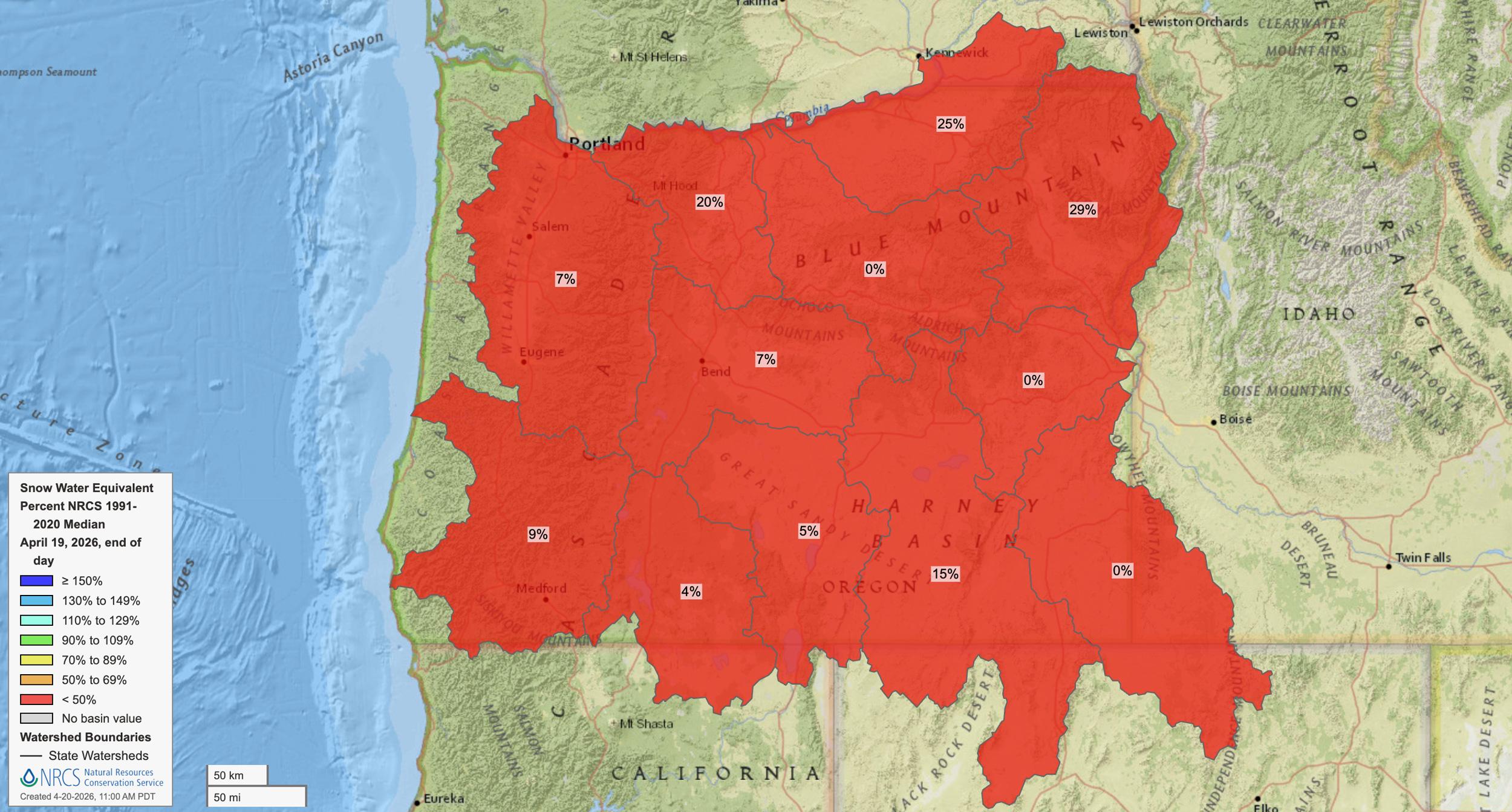
2026
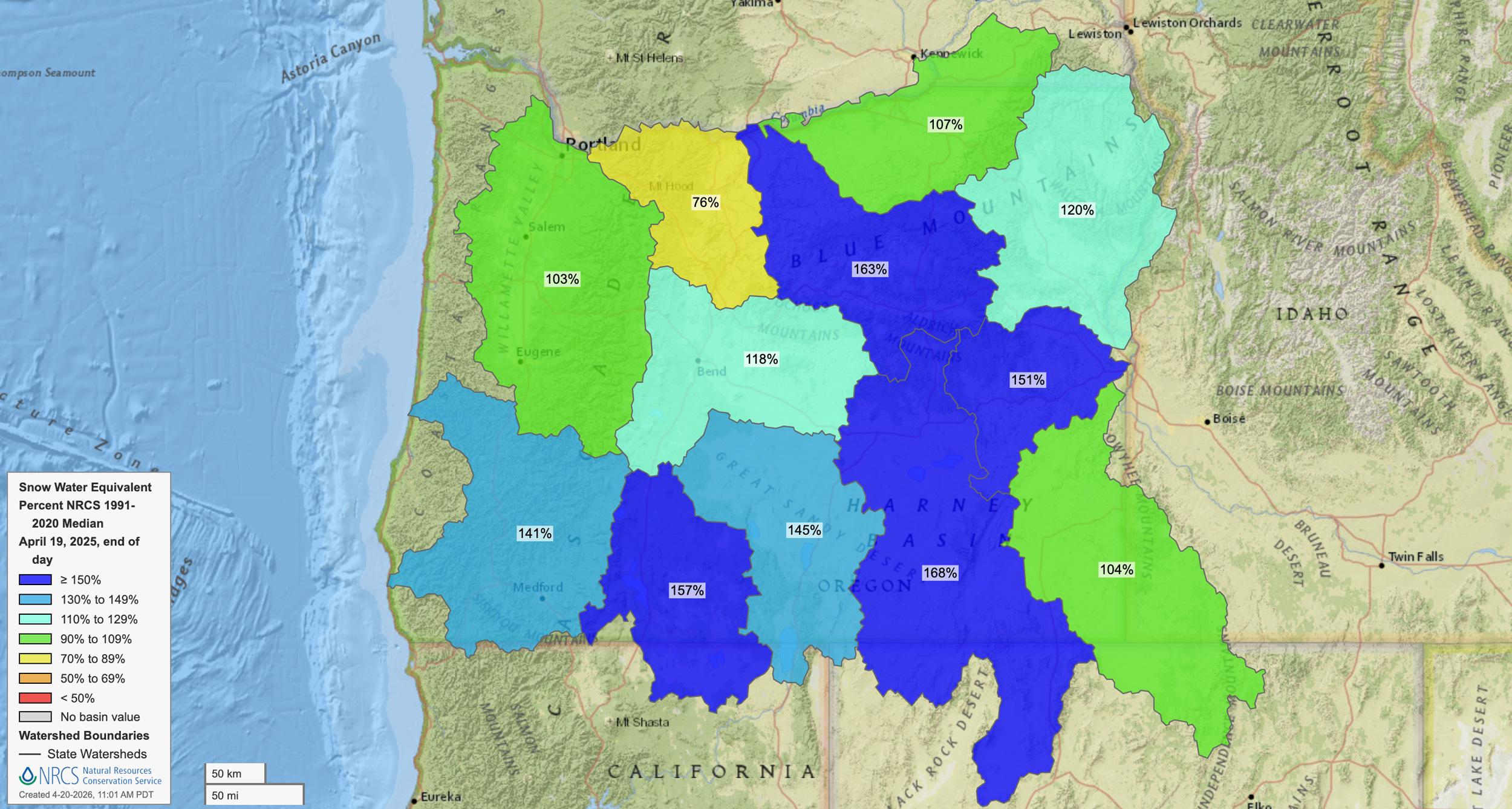
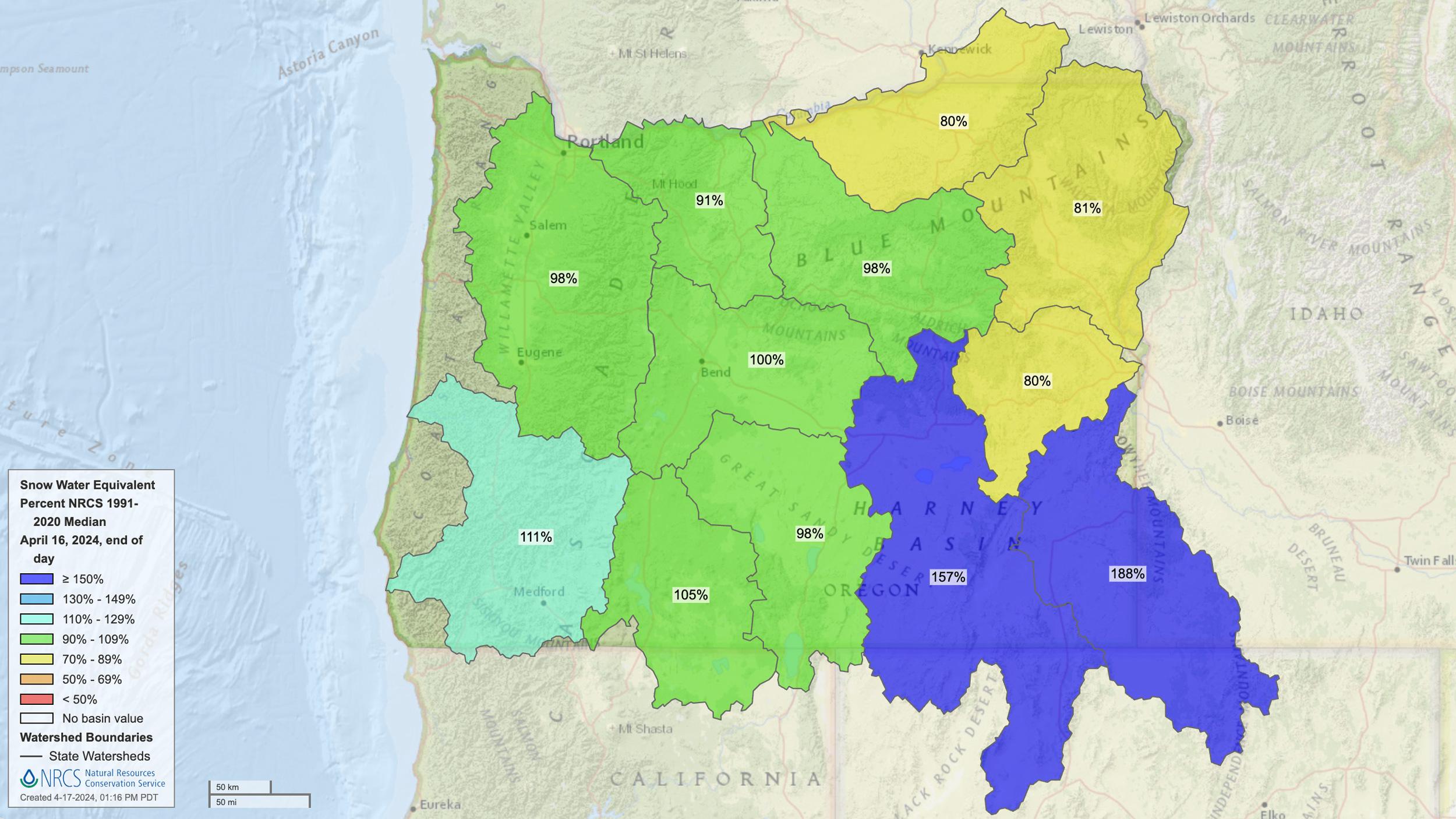
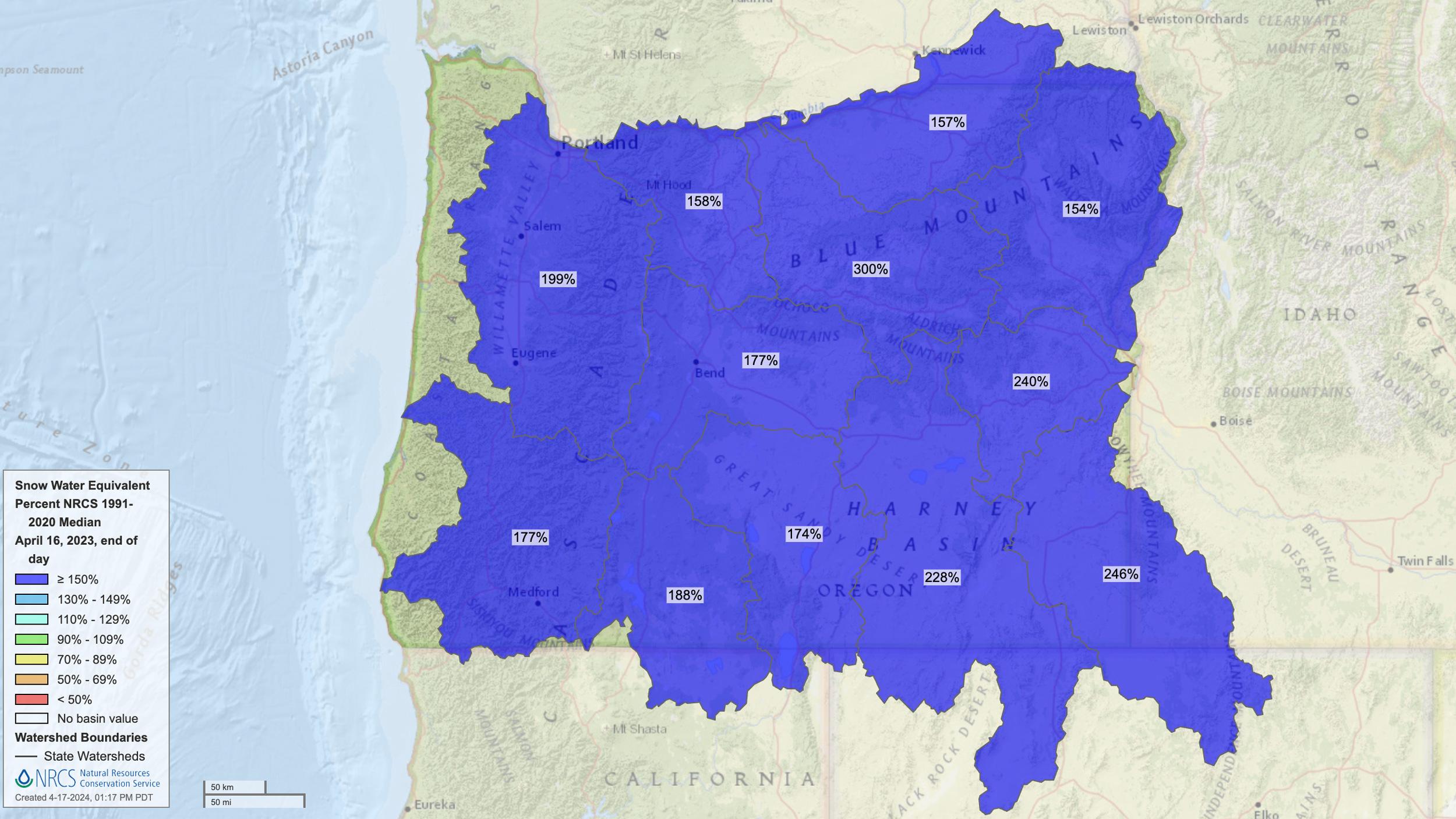
For 2026, Oregon experienced one of the lowest snow water equivalent (SWE) levels on record. SWE measures the amount of water stored in the snowpack and is a key indicator of how much runoff will be available in the spring and summer. By early February 2026, Oregon’s statewide average SWE was only about 2.9 inches, the lowest recorded since modern SNOTEL records began in the early 1980s and nearly 30% lower than the previous record low in 2015. Much of the state’s snowpack hovered around 30–55% of normal, with many basins reporting less than 50% of the historical median. Warm winter storms caused much of the precipitation to fall as rain instead of snow, while dry periods limited accumulation at higher elevations. As a result, a widespread “snow drought” developed across Oregon, leaving the state with historically poor snowpack conditions for the 2026 water year.
2025
2024
2023
2026
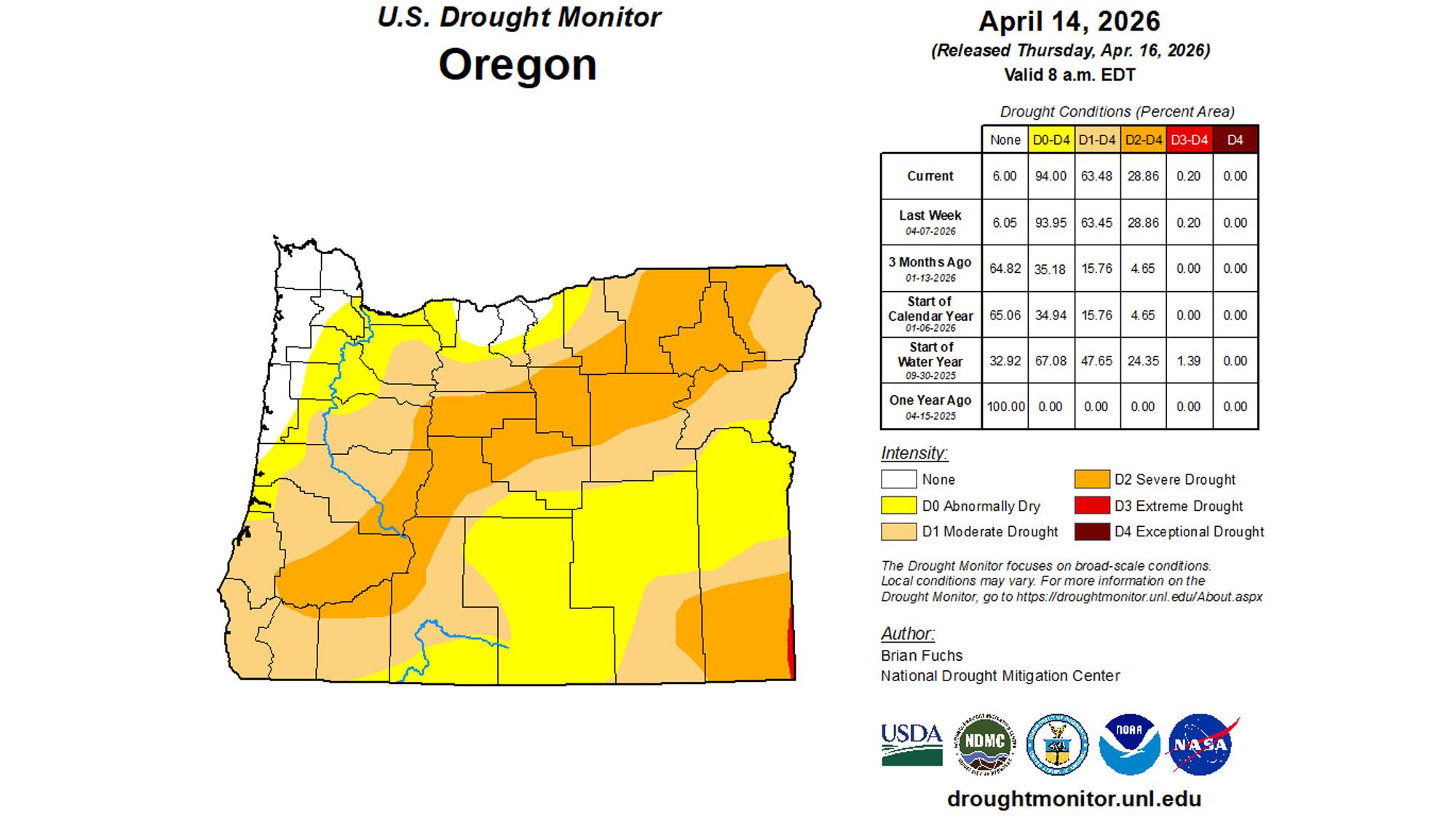
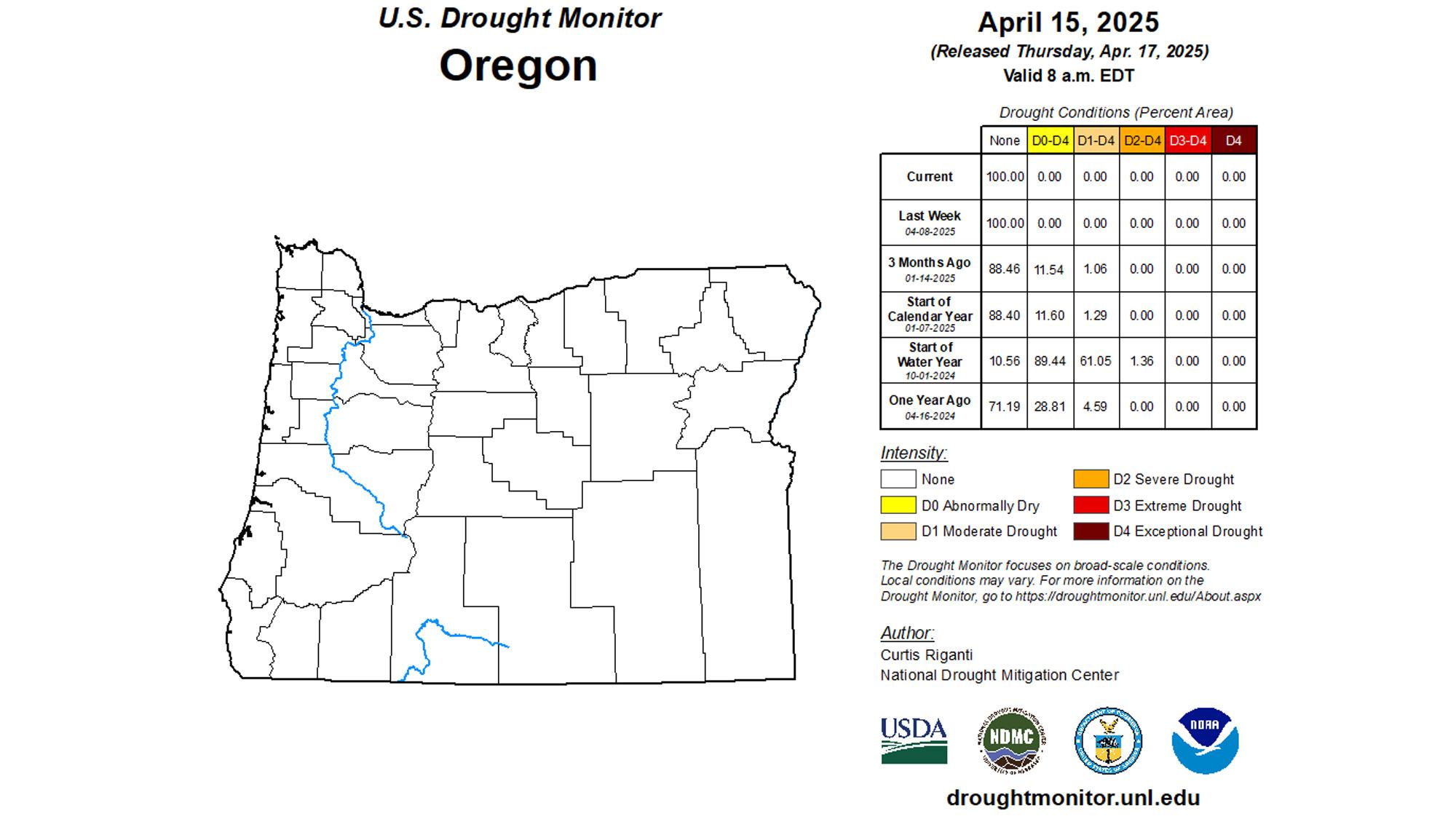
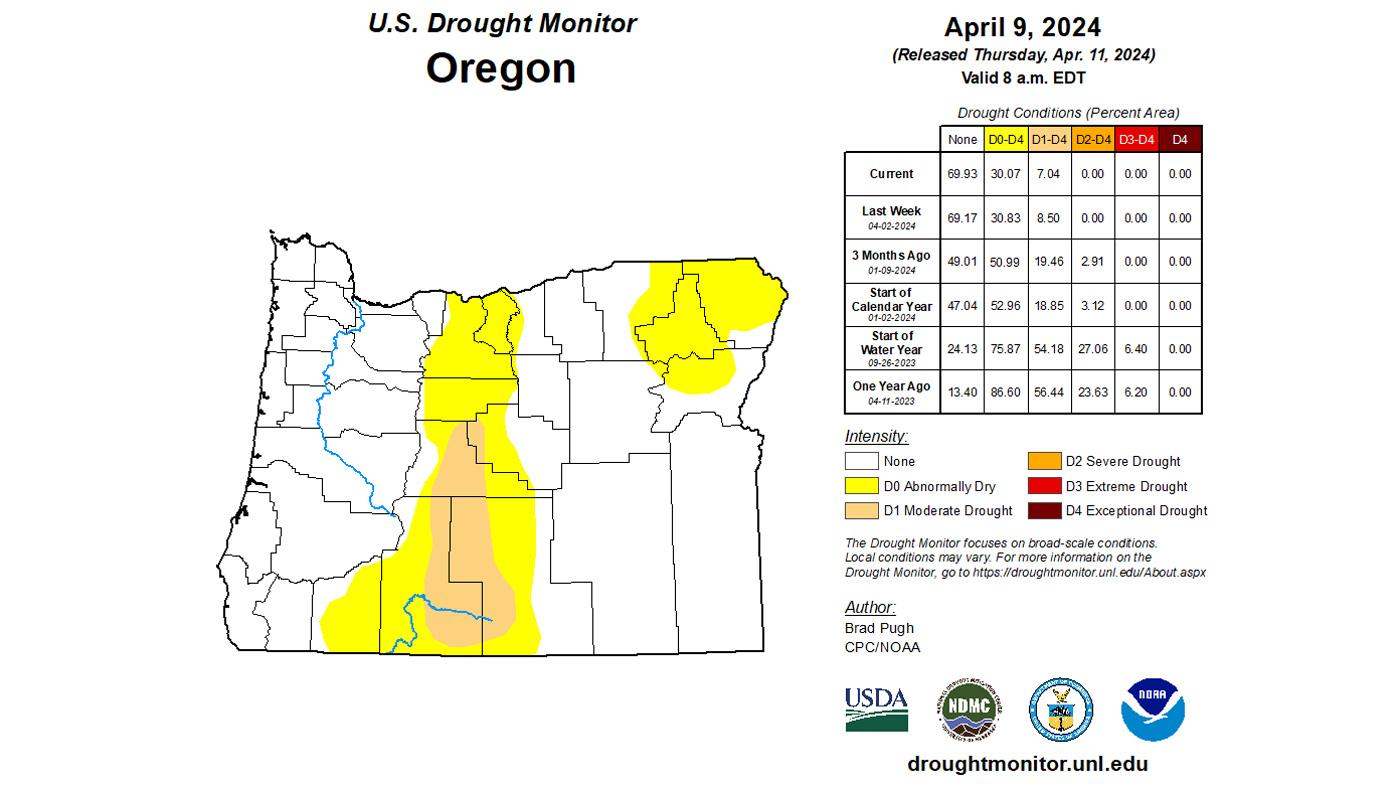
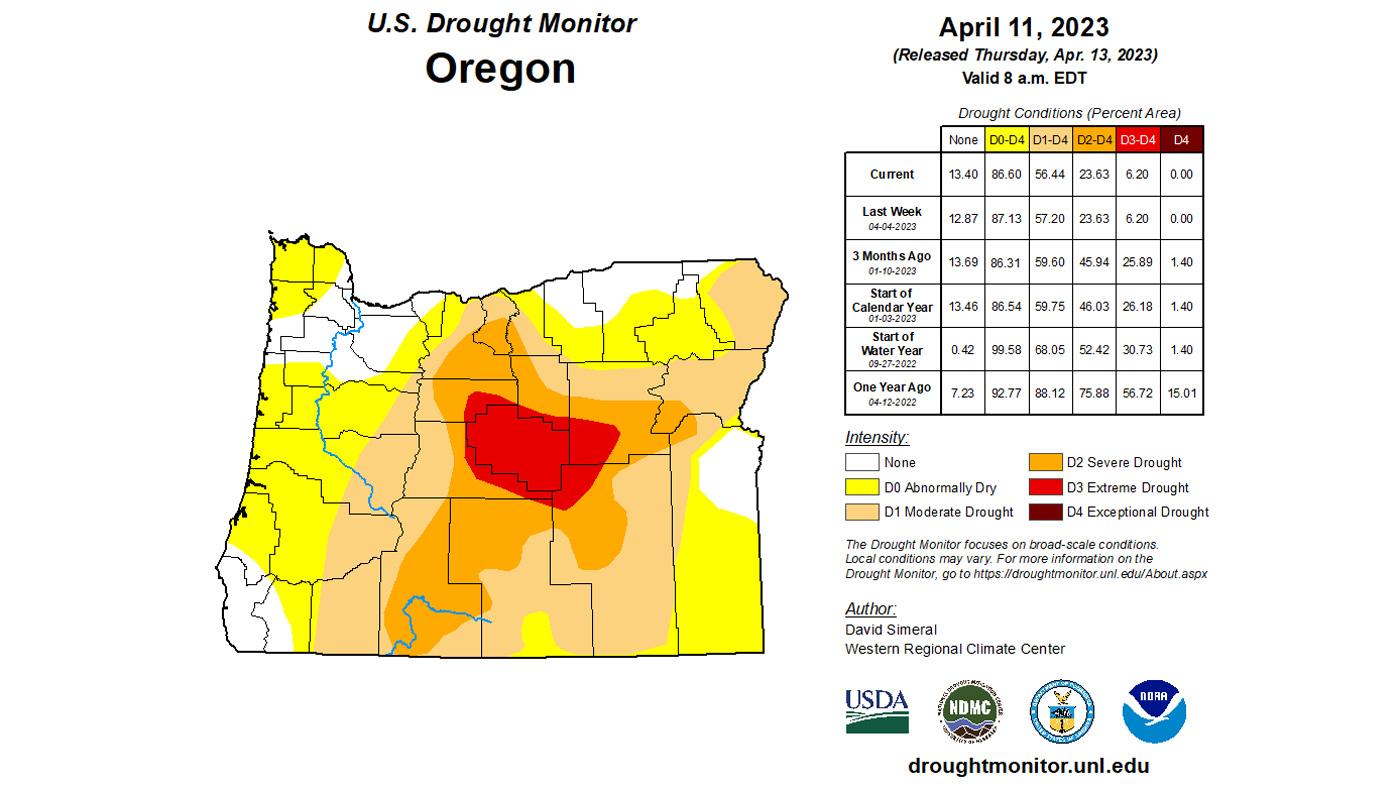
The 2026 drought map for Oregon shows that much of the state was experiencing dry conditions during the winter and early spring. The southern and central portions of the state are currently experiencing little to no drought, and this is something to keep an eye on when applying. With the current lack of snowpack in Oregon, I would expect this map to worsen as we approach summer, even with good spring rainfall.
2025
2024
2023
Oregon’s deer draw operates on a preference-point hybrid system. There is both a preference point and a random draw portion. Out of the total tags, 75% are allocated to the highest point holders who apply for any given hunt, and the other 25% are randomly allocated with no weight given to the number of points that you have. On the random side of that draw, every applicant is on a level playing field for those tags. Note: if there are only three or fewer for any particular hunt, there will be no random tags available.
Another thing to understand is the distribution of tags between residents and nonresidents. 95% of the tags are allocated for resident applicants, and the remaining 5% are allocated for nonresident applicants. It’s not very generous for the nonresident pool, but there are plenty of hunts with enough tags to satisfy the hybrid draw system (75/25). Meaning that in most cases, there’s always a chance.
If applicants wish to build points only, then they can purchase a “point saver” option when applying in the draw. If you miss the main draw, then preference points can be purchased from July 1 through Nov 30.
Oregon will allow applicants to enter five hunt choices. Every applicant's first choice is considered before moving to an applicant's second choice, so on and so forth. Preference points are only purged if an applicant draws their first choice. If you apply with the point saver code as your first choice, then you cannot put a second through fifth choice on your application. There is no waiting period for reapplying for deer if you drew a tag the previous year.
Oregon will allow eighteen people in a group application for deer. A group application will have their points averaged and will round up to the next whole number if the average is .51 or above and down to the whole number if the average is .50 or below. A group application is treated as a single application where, if selected, all applicants will receive a tag, provided there are enough tags to satisfy the size of the group. If there are not enough tags, no one on that application will receive a tag.
If you are successful in drawing a tag, you have up until the day before the earliest hunt starts to purchase the tag. Once you have purchased the tag, you cannot return the tag for a refund. If you draw your first choice, your preference points will be purged, so make sure you actually want the permit you apply for.
In addition to the standard controlled hunt draw, Oregon also offers a separate drawing for what are known as premium hunts. This drawing is entirely separate from the regular controlled hunt process and provides tag holders with extended season dates where any legal weapon may be used. These hunts are drawn 100% at random each year, with no preference or bonus points associated with the application. There is also no resident or nonresident quota for these tags. Applicants must still pay the standard application fee and may list up to five hunt choices on their application. However, hunters may only submit one application per species (hunt code).
Oregon manages its mule deer seasons with a strong emphasis on hunter opportunity. As a result, true trophy hunts are limited, and chances to pursue a mature buck are generally lower than in many other western states. For nonresidents, those opportunities are even more limited because only a small percentage of the available tags are considered high-quality hunts. That said, there are still a handful of units capable of producing impressive bucks each year. Statewide, Oregon maintains an average buck-to-doe ratio of roughly 23:100, while the overall mule deer population is estimated to be about 50% of the long-term objective. With the new mule deer hunt units focusing on actual mule deer herd ranges and migration patterns rather than outdated boundaries, there is hope that herd numbers will begin to trend upward as a result of this change in management.
There are fifteen youth deer hunts available in 2026 following the implementation of the new deer hunting boundaries. These hunts begin one week prior to the regular rifle deer season and offer youth hunters under the age of 17 an excellent opportunity to harvest a buck with relatively low hunting pressure during that first week of their season.
If you are looking for a hidden gem, your best bet is to consider applying for one of the archery-controlled hunts. These seasons are still fairly new and can be drawn with little to no points. Also, if you have access to private land in the eastern/northeastern part of the state, that would greatly improve your chances of finding a mature buck with one of these less coveted tags.
The biggest resources to find hidden gems that fit your needs are tools like Filtering portion and Draw Odds.
With the new shake-up in Oregon for new deer unit boundaries, draw odds will be difficult to project in 2026. Generally, if you want to put a deer tag in your pocket with low points, archery season has historically been a 100% draw in most units with 0-1 points for both residents and nonresidents.
Rest assured, units like TC-01, TC-02, and ST-01 will take upwards of 20+ points to draw as a resident.
Oregon’s blacktail deer populations are doing well, with most units offering general season over-the-counter (OTC) tags for both archery and rifle hunters. In addition to these opportunities, there are also limited-quota controlled hunts available for archery, muzzleloader, and rifle seasons. Unlike other deer species in the state, Oregon does not manage blacktail deer with a specific population objective. Current estimates place the statewide herd between 225,000 and 320,000 deer, with an average buck-to-doe ratio of about 27:100.
Many of the coastal units contain a higher percentage of private land than public ground, which comes with both advantages and challenges. While access can sometimes be more difficult, private land often provides better opportunities to harvest mature blacktail bucks if you are able to secure permission. Even with the lower percentage of public land in some areas, Oregon remains a great option for hunters looking to add a blacktail to their deer slam or simply pick up a tag and hunt this season.
Note: There is one unit that has established herds of mule deer as well as blacktail. That unit is 30. Be aware that blacktail bucks harvested from those units would not qualify for Boone & Crockett (B&C).
Residents has five hunts that could have been drawn with zero points. Dive into Filtering and standalone Draw Odds, to see which of those hunts is best for you. Harvest success and percentage of 4-point bucks are relatively good for those units for all weapon types.
Nonresidents had three hunts that could have been drawn with no points. Muzzleloader-controlled hunts in Units 23 and 25 and rifle hunts in Units 16. If you’re not into building points, then these can be a great option for you.
Every hunt is available except for muzzleloader 21/23, rifle 12, 21/23, and 22. Some of the more interesting options might be muzzleloader 28 or rifle in Unit 15. All of those hunts required three to four points so you will be giving up a few points to draw those. The hunts that cannot be drawn required anywhere from nine to 18 points in 2025. Applicants can either decide to cash in their points and go hunting or stay in it for the long haul.
If you want to burn your points and go hunting, the archery hunt in Units 21/22/23/24 took three points. For muzzleloader, Units 19, 21, and 27 are all attainable with under five preference points. The early rifle 41/42 hunt and Unit 15 required three points.
Unit 28 muzzleloader required 14 points. You shouldn’t need to build more than five or six points to draw a great tag in Oregon. There are only four or five hunts that will require more than 12 points.
Oregon is home to the only delisted population of Columbian whitetail deer in the world. While whitetails are found throughout the Pacific Northwest, the southwest corner of the state supports a relatively small herd of around 2,000 animals. Limited tag availability each year makes these hunts especially difficult to draw. Tag numbers are expected to remain unchanged for the 2026 season.
Oregon has a decent population of whitetail deer in the northeastern portion of the state. There are 19 units that offer a chance at a whitetail buck, although there are very few hunts/tags that are strictly for a whitetail buck only. I have highlighted the whitetail-specific hunts below. Trophy potential is generally average; however, a few larger bucks are taken each year.
These are new hunts with new boundaries for the 2026 season.
Hunt numbers and names changed
New hunt boundaries
Some units were changed to whitetail deer tags or muzzleloader-only
Several northeastern areas now separate mule deer and whitetail tags.
Controlled hunt draw results will be out on June 12, 2026.
You can apply online here.
The deadline to apply is May 15, 2026, at 11:59 p.m. PT.
Results will be available by June 12, 2026.
If you made an error on your application, corrections can be made until May 25.
You are required to purchase a hunting license prior to applying.
Applicants do not have to front the cost of the permits they apply for.
If you are successful, you will receive a notification to purchase your tag.
Hunters 17 years old or younger need to have a hunter’s education certificate unless they are ages nine to 15 and enrolled in the youth mentor program.
Oregon deer, elk, and antelope run on a modified preference point system.
75% of the tags are allocated to maximum point holders; 25% are randomly allocated with no regard to points.
Points can also be purchased during a separate timeframe from July 1 to Nov. 30.