



The brand-new 2027 Mathews ARC APEX hunting bow
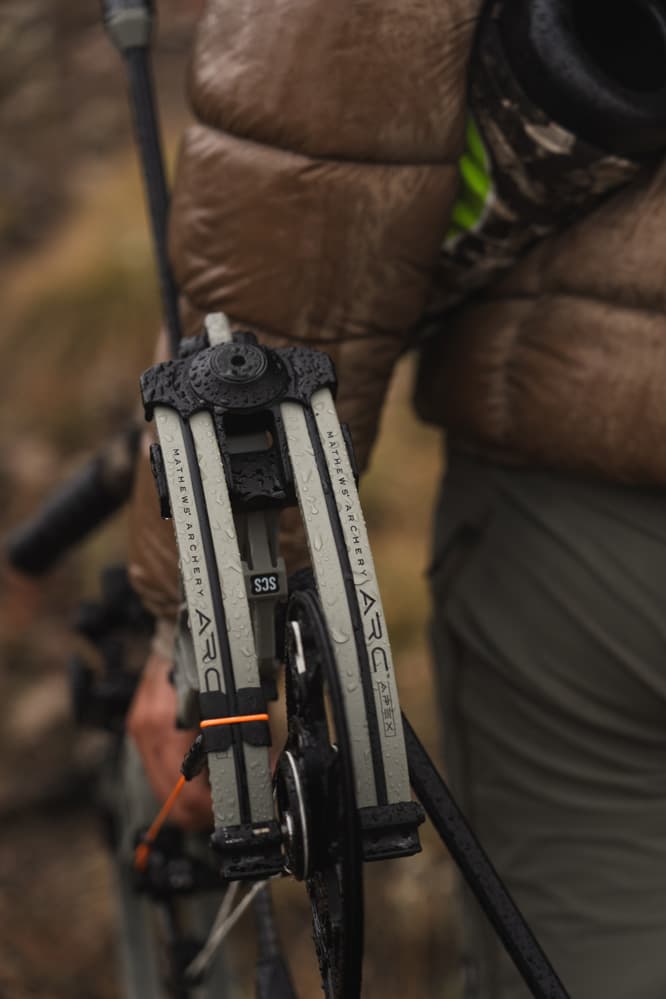
November is special for a lot of reasons, but for me it’s my annual chance to finally talk about the new Mathews bow lineup that I have been using all fall and urge you to visit your local pro shop to shoot one! Every year my opinion is that the new bow is better, and although it might seem like lip service, it’s true. The new Mathews ARC APEX retains the features of the ARC that I loved, and it also offers an adjustable cable guard which allows you to move it either left or right to gain more clearance for your vanes or to further assist in tuning. That feature is the biggest change of the new ARC APEX, but there are others when compared to last year's ARC. In addition, the riser geometry is slightly different, and there are some other subtle changes, but let's dive into the specs and my thoughts on the new bow.

A bull elk I took in September with the 2027 Mathews ARC APEX bow.
First, the new ARC APEX is available in three different axle-to-axle lengths, 28” 32”, and 35”. The axle-to-axle length may not be as sexy as how fast the bow might be, or how “dead in the hand” a bow is, but in my opinion the three different axle-to-axle lengths is the most interesting thing about the new bows. I didn’t think I would see a 34” plus hunting bow from Mathews in 2027, but I was pleasantly surprised that we did. In talking with the guys at Mathews, the decision to do another longer axle-to-axle hunting bow was based on the popularity of the ARC 34 and the fact that there seemed to be so much crossover in guys who were shooting one for both target and bowhunting. I loved the ARC 34; the long riser made for a very steady platform. That bow was a ton of fun to shoot. By increasing that axle-to-axle by another inch this year, the new ARC APEX 35 is likely to be even more stable in the hand. That bow will be very popular with open country western big game hunters and target archers alike.
There are many factors that go into how well a bow holds, but if we are simply looking at axle-to-axle length, the longer it is, the more it will resist movement. I’ve used this analogy many times, and it applies. If you held a broomstick in your hand and tried to rock it back and forth, it would resist movement better than something like a yardstick would. All things being equal, longer bows are more stable in the hand. That being said, if you are buying a bow purely for hunting, 35” could be too long for the type of hunt you are doing. If you are primarily hunting from a treestand, out of a blind, or in thick vegetation, the longer bow could be more cumbersome than it’s worth. Even on some backpack western big-game hunts, the size and added weight of the longer bow may be more than you want. I would encourage anyone who is considering a new bow to shoot the 35”. I promise it’s going to aim well and be a real pleasure to shoot, but consider the size and weight and the type of hunting you are primarily doing to evaluate which bow is right for you. I will say, of the new bows launching, the 35 is the most intriguing for folks that are wanting one bow for all types of archery: indoor, 3D, and hunting.
When I talked to Derek Nelson at Mathews Archery back in July about the new bows, he knew that historically my preference has been longer bows, but he suggested that I try a 32” version this year for bowhunting. I was hesitant, but agreed based on the fact that I had a few elk tags and a whitetail tag for this fall, where I thought the shorter length might be advantageous. Having hunted with slightly longer bows over the years, one of the first things I noted about the 32” was that it did feel easier to maneuver around in the mountains. Sure, it’s only a few inches shorter, but honestly, it felt lighter and easier to carry, which I appreciated.
One reason I have resisted shorter bows is the more acute string angle at my longer draw length. While the new 32” ARC APEX feels different from my ARC 34” in regard to the string angle and anchor point, it’s not in the negative way I thought it might be. The SWX-3 cams are large, and the string angle is more exaggerated due to the size of the cams, and I didn’t struggle with the anchor point or the distance of the peep to my eye. After setting the bow up and tuning it, I was already feeling really comfortable with the length of the bow, and in all truthfulness, it held way better than I expected.
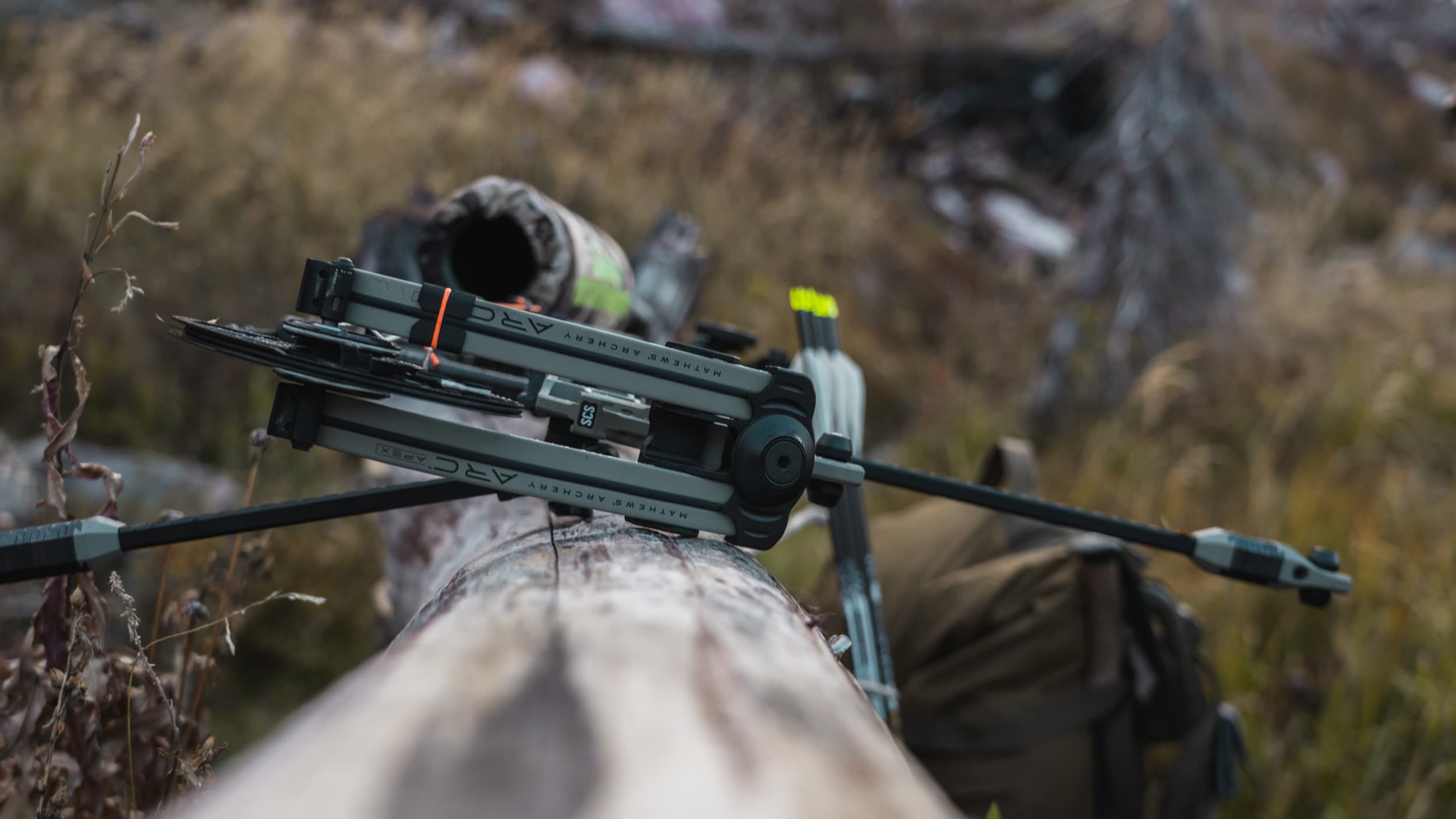
Is the 32” as stable at full draw as my ARC 34? To answer that question, I would say not quite, but not to the extent I expected. It still aims and holds very well, and I did appreciate the maneuverability of the shorter bow in the mountains. While I haven’t spent any real time with the 35, it would be hard for me to suggest to anyone that they shouldn’t first consider the 32. I honestly think that for most people that are chasing mule deer, whitetail, elk, antelope, and any other critter, the 32 is the more reasonable choice. That’s not to say that I won’t order a 35 and I anticipate shooting it for indoor, outdoor, and just general good time plinking and I’m quite certain I’ll put more arrows through it than any other bow… but for hunting purposes I think the 32” makes the most sense. Lastly, I won’t go into the 28” option because I have never shot a bow that short but I’d think it would make a great bow for folks hunting out of a treestand, ground blind, or that have shorter draw lengths, say 24.5” to 28”. In talking with Mark Hayes, who is a leading engineer at Mathews, he stated that people should not overlook the 28. I haven’t had time to shoot the 28, but Mark, who is a die-hard bowhunter himself, had high praise for the feel and accuracy of the 28.
Other features of the Mathews ARC APEX
Bridgelock
With that, let’s look at the rest of the features and specs of the new ARC APEX Bows. Like the previous few years' of Mathews bows, the ARC APEX offers you the ability to mount your sight, rest, and stabilizers (Mathews Bridgelock Stabilizers) within the riser of the bow. The Bridgelock mounting systems make for a well-balanced, streamlined setup. When using their stabilizers and a compatible sight, it allows for a more secure mount due to the amount of the bar that runs through the riser. I also appreciate being able to slide the front stabilizer deeper into the riser if I want to shorten it. It comes in handy when hunting out of a ground blind or thick cover when I need to shorten the front stabilizer to gain clearance in tight spaces. I also like their new Mathews Integrated Bridge-Lock V-Bar Mount that slides through the riser and allows you to mount your back stabilizer. That design has eliminated movement in the location of the back stabilizer. I remember a number of years ago I was hunting elk in Wyoming, and while ascending a steep slope I had a rock roll under my boot and I planted my bow straight into the hillside, resulting in my backbar bracket loosening and changing its location. Luckily, I had marked it with a silver sharpie and had the proper Allen wrench to fix it, but since they have integrated the mounting for that back bracket into the riser, I have had no issue with it moving.
Limb Shift
The ARC APEX also adopts the Limb Shift Technology that the original ARC and Lift X utilized. In essence, you no longer have to remove the cams and shim them with spacers to easily tune the left and right flight of your arrow. Limb shift allows you to attach your rest at a distance of approximately 13/16” from the center of your arrow to the inside edge of the riser and then use Limb Shift to tune the bow. It’s a super simple process to paper tune the ARC APEX.
When paper tuning, you can stand at a distance of about 10-13 feet and shoot arrows through paper. If you have a tail left or right arrow paper tear, you simply remove the set screw in one or both of the cams and use an Allen wrench on the axle itself to then shift the direction of the tear.
If you have a left paper tear, you'll need to shift the limbs left. For a right paper tear, shift the limbs right. You no longer have to go back and forth between shimming your cams and moving your rest left or right to tune the bow. With limb shift, you can micro-tune the bow to achieve perfect bullet holes through paper and clean flight out of the bow without ever touching the rest or pressing the bow.
SWX-3 Cams
The ARC APEX has a small change in cams. Mathews is calling the new cams SWX-3. The cams still use the SWX modules. The mods that were used on the Lift X and ARC bows can be used on the ARC APEX. The SWX-3 has a small perimeter weight in the cams that both reduces felt recoil and retains speed. One small change is that they have eliminated the timing holes in the cam and replaced those with timing/sync marks on the cams. With previous cams, you would look at where the control cables were located in relation to the timing hole in the cam and compare one with the other to evaluate the synchronization of the cams.
What you are trying to achieve is both cams rolling over and each draw stop contacting the cable at the same time. With previous SWX cams when someone would change mods, perhaps something like a 70lb mod to a 60lb mod the relation of the timing hole to the control cable would change. People would then twist or untwist the cables and strings to get the cable to be dead center in the hole again which was then putting each cam in a location where it was not as efficient as it could be. In order to address that, the new timing marks will be related to whatever draw weight mod you have on the cams. As previously stated, the SWX-3 cams utilize mods to achieve your desired draw length, draw weight, and let-off. You can swap out mods without a press to change all three of those. This means I can change my draw length of the ARC APEX 32 from 25.5” to 31” in half-inch increments; I can change the draw weight from 55, 60, 65, 70, 75, 80 pounds of draw weight, and I can choose between 80% and 85% draw mods.
For example, I can purchase a set of mods that are 30”, 60 pounds, with 85% let-off for cold weather, close-quarters hunting for whitetails, and I could also get a set of mods with 30”, 75 pounds, and 80% let-off for elk hunting out west. The mods on the SWX-3 cams allow you to change the draw weight without removing turns from your limb cups, which retains your desired draw length and allows the bow to retain maximum efficiency. Overall, it’s a really slick system.
Lastly, one question that regularly comes up about cams is how does the draw feel. For me, at my draw length of about 30”, 70 pounds and 80% let-off, the SWX-3 cams are smooth throughout. The draw weight feels the stiffest in the first few inches and is relatively steady throughout, with very minimal roll over into the backwall. It’s a consistent, smooth draw all the way, and it’s easy to draw in a level, smooth, and quiet manner in a hunting situation.
Flite Cable Containment
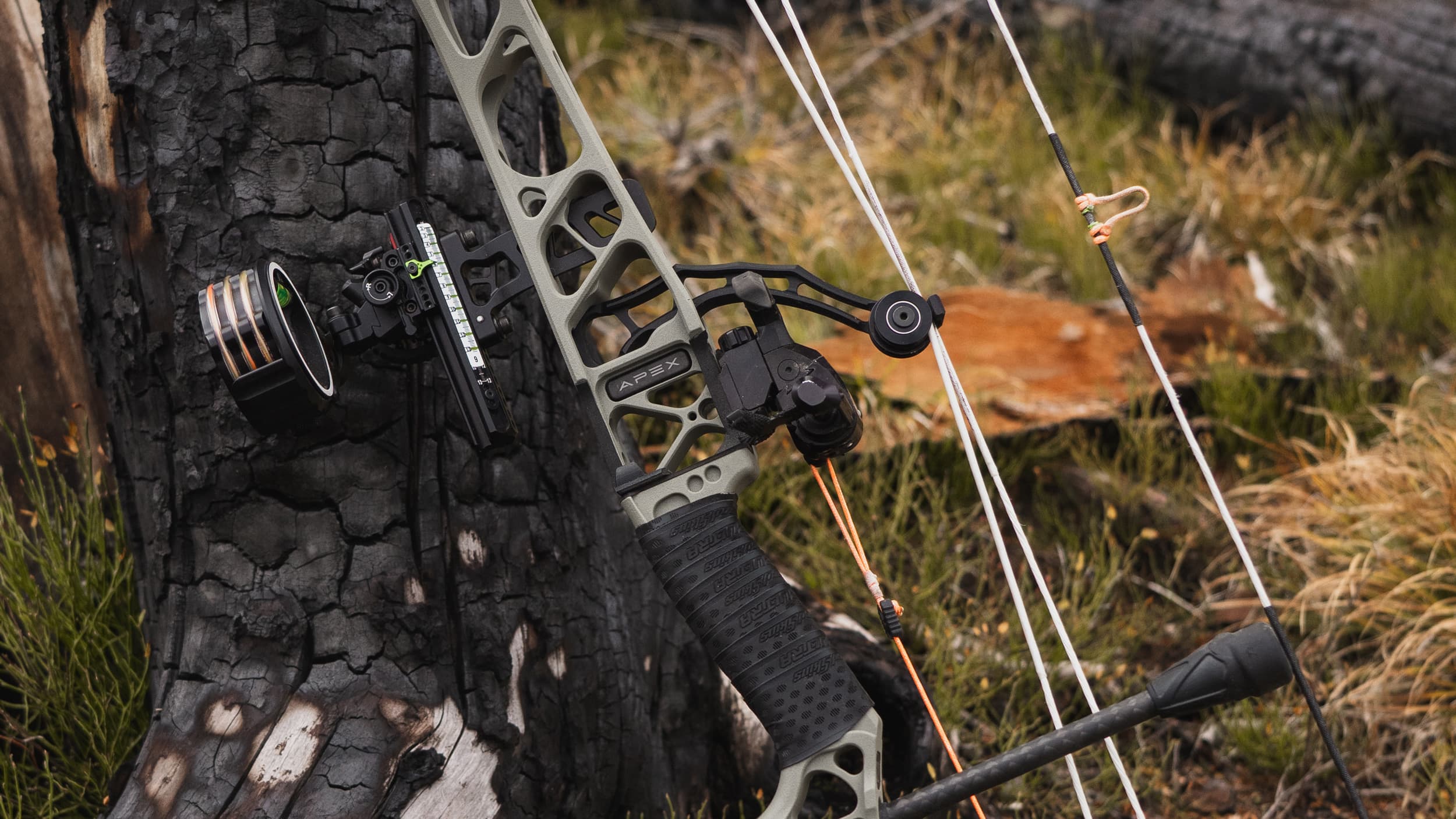
Finally, the most noticeable change on the ARC APEX is the Flite Cable Containment system. The simple explanation for the Flite Cable Containment system is that it allows you to move your cable guard left or right. The primary reason why you might want to use this feature is to gain additional clearance for high-profile vanes.
In the past few years, I have had a few people reach out because they were getting vane contact with their cable guard when trying to shoot high-profile vanes like Blazer Vanes. To address that, you can use the Flite cable rod adjustment to move it farther away from your vane to gain the clearance you need. After that, use your limb shift technology to shift the limbs to tune the bow. The Flite Cable Containment system is easy to adjust. It’s integrated into the riser and has two Allen screws, one that functions as a lock and one that moves the guard either in or out. In my opinion, it makes sense to keep the cable guard as close to center as possible, while having enough clearance that you are not experiencing vane contact and thus degrading the true flight path of the arrow.
I’ll wrap up with the specs for all three new Mathews ARC APEX bows, which you can find in the table below.
Specs of the Mathews ARC APEX hunting bows
Spec | Axle-to-axle |
|---|---|
ARC APEX 28 | 28” |
ARC APEX 32 | 32” |
ARC APEX 35 | 35” |
Spec | Brace Height |
ARC APEX 28 | 6” |
ARC APEX 32 | 6” |
ARC APEX 35 | 6.75” |
Spec | IBO (fps) |
ARC APEX 28 | Up to 347 fps |
ARC APEX 32 | Up to 346 fps |
ARC APEX 35 | Up to 337 fps |
Spec | Weight |
ARC APEX 28 | 3.94 lbs* |
ARC APEX 32 | 4.2 lbs* |
ARC APEX 35 | 4.63 lbs* |
Spec | Draw Weight |
ARC APEX 28 | 55, 60, 65, 70, 75, 80 |
ARC APEX 32 | 55, 60, 65, 70, 75, 80 |
ARC APEX 35 | 55, 60, 65, 70, 75, 80 |
Spec | Let Off |
ARC APEX 28 | 80% or 85% |
ARC APEX 32 | 80% or 85% |
ARC APEX 35 | 80% or 85% |
Spec | Draw Lengths |
ARC APEX 28 | 24.5” - 30” |
ARC APEX 32 | 25.5” - 31” |
ARC APEX 35 | 27” - 32.5” |
Spec | Cam |
ARC APEX 28 | SWX-3 |
ARC APEX 32 | SWX-3 |
ARC APEX 35 | SWX-3 |
Spec | MSRP |
ARC APEX 28 | $1,499 |
ARC APEX 32 | $1,599 |
ARC APEX 35 | $1,699 |
Spec | ARC APEX 28 | ARC APEX 32 | ARC APEX 35 |
|---|---|---|---|
Axle-to-axle | 28” | 32” | 35” |
Brace Height | 6” | 6” | 6.75” |
IBO (fps) | Up to 347 fps | Up to 346 fps | Up to 337 fps |
Weight | 3.94 lbs* | 4.2 lbs* | 4.63 lbs* |
Draw Weight | 55, 60, 65, 70, 75, 80 | 55, 60, 65, 70, 75, 80 | 55, 60, 65, 70, 75, 80 |
Let Off | 80% or 85% | 80% or 85% | 80% or 85% |
Draw Lengths | 24.5” - 30” | 25.5” - 31” | 27” - 32.5” |
Cam | SWX-3 | SWX-3 | SWX-3 |
MSRP | $1,499 | $1,599 | $1,699 |
For a more realistic, hunt-ready setup at my specs, shooting a 475-grain arrow, I was getting approximately 300 fps. That’s a ton of kinetic energy, more than enough to hunt any game. The APEX was a breeze to set up and tune. I set my nocking point approximately 1/16” high of center when measured between both axles. I set my rest at 13/16” from the center of the arrow to the edge of the riser and ran the arrow at 90 degrees from the string to the rest. I made some slight adjustments with the limb shift feature on both the top and bottom cam and was able to get good arrow flight relatively quickly.
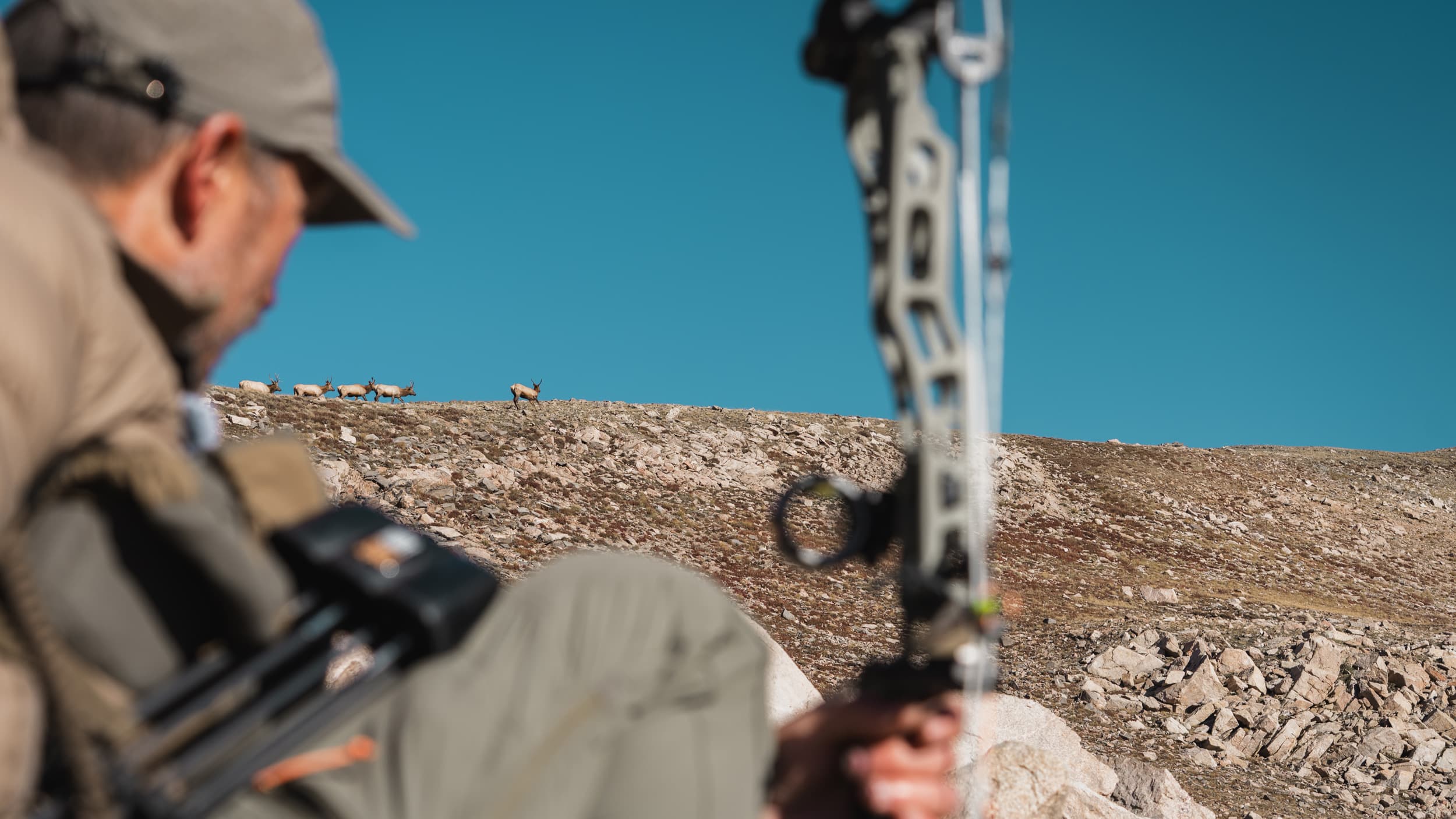
The ARC APEX 32 holds really well. It’s comfortable to draw and easy to aim. One final note: the ARC APEX 32 is really quiet. Last year I hunted with the ARC 34 all fall, and without question the new ARC APEX 32 is quieter. More than once this fall while hunting, I had buddies who said they hadn’t even heard the bow go off, even though they were close to me when the shot occurred.
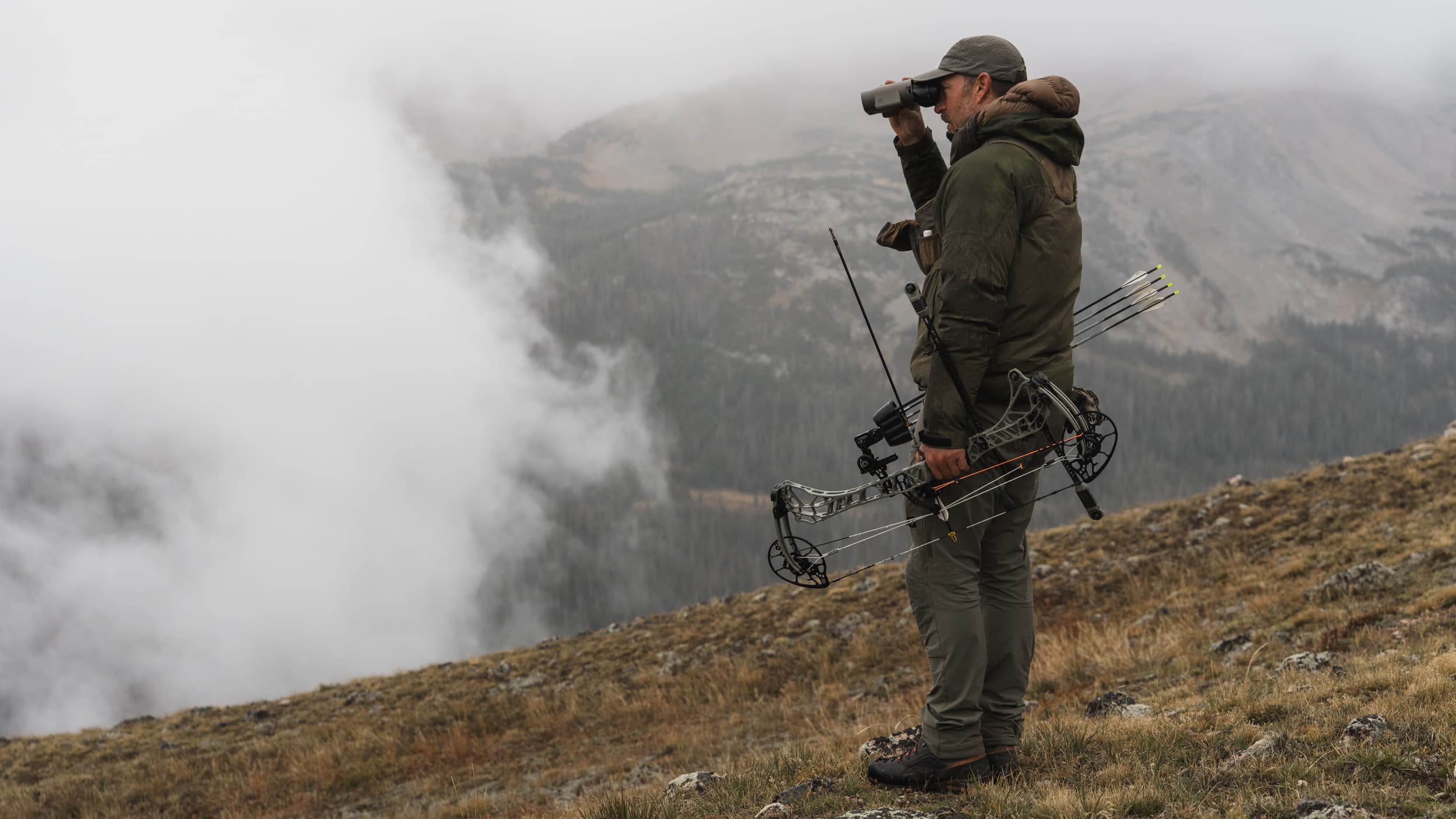
The new ARC APEX bows are available in a couple of new colors, in addition to the colors they offered last year. The new color options are sage green and Mossy Oak Fall Foliage camo. The ARC APEX 35 is also available in white and a bronze color for folks who are looking to use it primarily as a target bow. You can also visit Mathews customization page on their website and build out a bow with whatever combo of riser, limbs, and string colors you want. Overall, the new ARC APEX is a bit faster, quieter, more tunable, and has been a lot of fun to shoot and hunt with over the past few months.
Here at our pro shop in Las Vegas, we will have new Mathews ARC APEX bows to shoot, so if you are in the area or plan to be, make sure you stop in and talk with Chad or Gabe to test one out for yourself!