


The sleeping pad and the sleeping bag you select for your hunts can be the difference between a good night's sleep in the backcountry and trying to motivate yourself to get up after a night spent tossing and turning. In my opinion, a quiet and lightweight sleeping bag is one of the best investments you can make, and a pad that allows you to be warm and comfortable is a must for any sleep system.
The R-value of a sleeping pad is often listed among the specs, but what is the R-value, and why does it matter?
If you were to lie directly on the ground, you would get cold relatively quickly as your body heat is lost to the ground below. Sleeping pads serve as the layer between you and the ground, and the R-value denotes the level of insulation the pad provides. The higher the R-value, the better the pad will insulate — aka resist the loss of body heat. When selecting a pad for your hunt, be sure to consider the R-value, as well as the weight, size, and thickness.
How much R-value do you need when hunting?
For summer scouting and early-season hunts, an R-value of one to three is sufficient.
For three-season camping/hunting, an R-value of three to five.
For late-season hunts, an R-value of over five keep you comfortable.
Sleeping bags come in a variety of sizes, shapes, weights, and materials. Down is commonly used as insulation in sleeping bags as it cuts the overall weight and is highly compressible. Typically, the higher the “fill power,” the lighter the sleeping bag will be. In essence, the fill power is the loftiness of the down insulation. Loftier down creates more dead air space, so less down can be used to achieve the same temperature rating. The only real potential downfall of a down sleeping bag is when down gets wet, it clumps, and will not insulate as intended. Conversely, synthetic insulated sleeping bags will still insulate when wet. Synthetic insulation does not compress as well, is typically heavier, and, in my opinion, does not insulate quite as well as down. A down bag is a great option as long as you keep it dry, while a synthetic bag is perhaps a better option for wet and humid environments. Overall, when selecting a sleeping bag, consider the weight, fill power, size, material, and make sure the temperature rating aligns with your intended use.
For some extra information, be sure to check out the Big Hunt Guys podcast, where Trail and Brady discuss sleeping systems for hunters:
Below, our gear junkies outline their sleeping pad and sleeping bag picks, along with the reasons they handpicked each option for their hunts each year.
Trail Kreitzer — Sleeping bag and pad for a September archery elk hunt
Almost 10 years ago, I purchased a pair of Therm-A-Rest NeoAir XLite sleeping pads — one for my hunts and one for a backup. Additionally, my kids have regularly gone with me on overnight scouting trips or hunts, and it’s great to have a spare for them to use. I still have both of those pads and plan on using them again this year. To date, I have only had one small hole in one of them, which was easily repaired and is still working flawlessly with just a tiny amount of silicone seam seal for repair. I chose the long size, which comes in at 1 lb flat and offers me good width at 25” and length of 77”. I prefer the wider pad so my shoulders and arms don’t hang off either side, and the length is great since I am 6’2”.
The R-value is 4.5, which is fantastic for summer scouting and August through October hunting when the temperatures dip. The Therm-A-Rest NeoAir XLite is 3” thick and utilizes horizontal baffles. The horizontal baffles are great for me as a side sleeper because this configuration keeps the pad from rolling around me and keeps my hips up off the ground and comfortable. For me, the XLite has been very durable, provides adequate comfort and insulation, and is lightweight when compared to other options on the market of a similar size and R-value. The only real cons are that they are not cheap, but I have had several years of use in the field with almost no issues, and it does require a few minutes and a lot of breath to inflate fully.
A quality goose down sleeping bag will last for decades if you care for it. I’ve used a lot of sleeping bags and quilts over the years, and, currently, for the bulk of my hunts, I’ve found that I much prefer a traditional mummy-style bag. The mummy style bags shave some weight, but sleep warmer than a quilt made from the same quality materials.
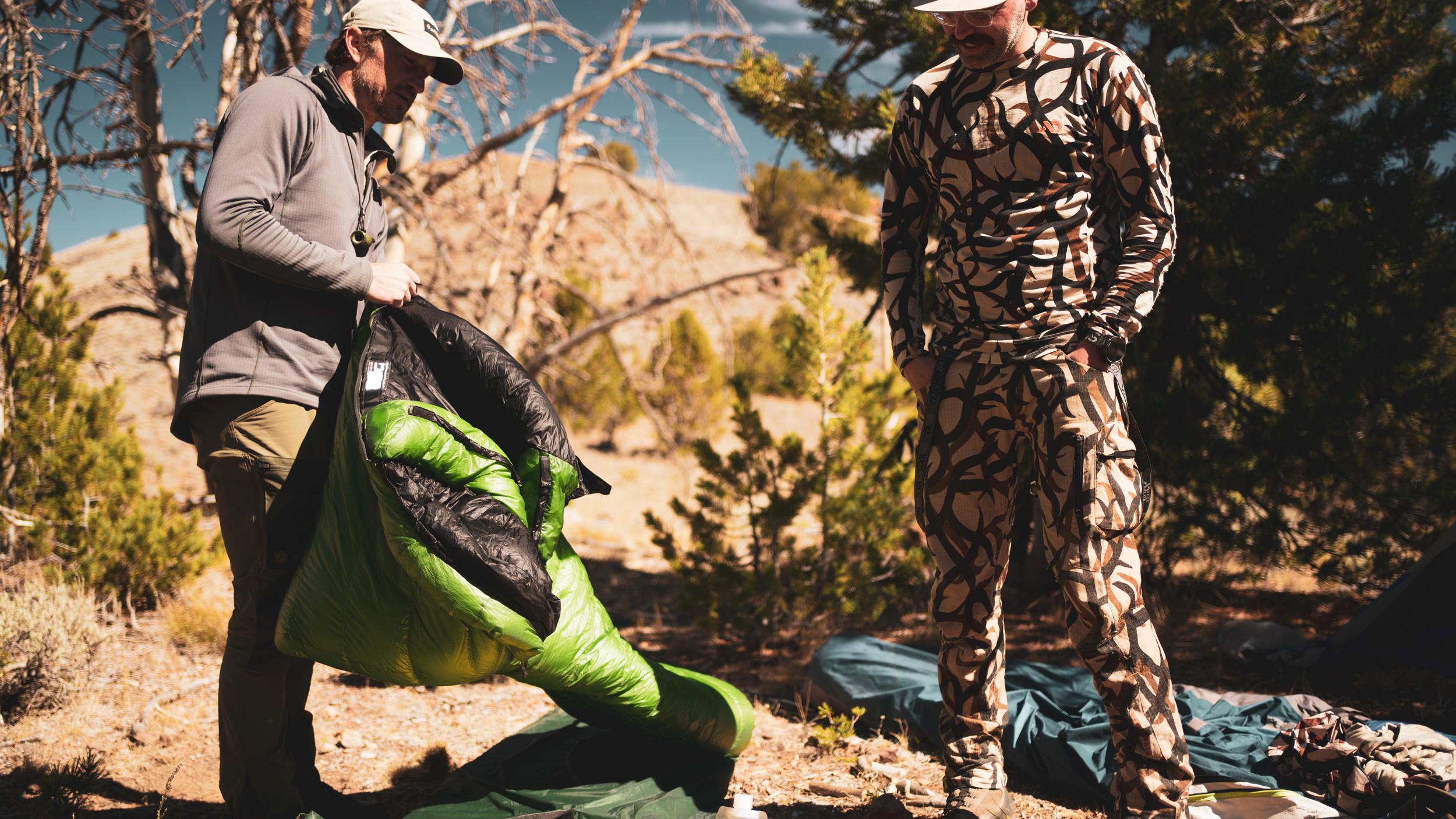
For my upcoming hunts, I'm going to be using the Argali Alpine 20 Degree Sleeping Bag. I had the opportunity to use this sleeping bag in 2024. I really enjoy the combination of vertical and horizontal baffles in the Argali sleeping bag with internal flow gates strategically that puts goose down where you need it the most to trap warm air and prevent down migration. The 20-degree bag will be perfect for a lot of early to late September elk hunting.
The other sleeping bag I really love is the Western Mountaineering Versalite 10 Degree Sleeping Bag. The shape of the Versalite is not exceptionally roomy, but it’s sufficient for my taller, more slender build. The Veralite weighs in at just over 2 lbs, which is a great warmth-to-weight ratio. I tend to sleep a little cold, so the 10° rating provides me some added comfort for certain archery elk hunts where high country temperatures might get cold. I’ve tried several sleeping bags, but the warmth, weight, and packability of the Versalite keeps me stuffing it in my pack year after year. You do have to keep it dry, I highly recommend a good three-season tent or a bivy/tarp to ensure that my bag provides the warmth I need.
Trail's Sleeping Pad Choice For Hunting:
Model: Therm-A-Rest NeoAir XLite (Long)
Weight: 1 lb 1 oz
Size: 25” x 77”
Thickness: 3"
R-Value: 4.5
Cost: $239.95
Trail's Sleeping Bag Choices For Hunting:
Model: Argali Alpine 20 Degree Sleeping Bag (Long)
Weight: 2 lb 1.4 oz
Temperature rating: 20 degrees
Fill power: 850+ Argali Dry Loft Down
Max user height: 6' 6"
Shoulder girth: 64”
Hip: 58”
Footbox: 40"
Cost: $605
Model: Western Mountaineering Versalite 10 Degree Sleeping Bag (Long)
Weight: 2 lb 2 oz
Temperature rating: 10 degrees
Fill power: 850+ down
Max user height: 6'6"
Shoulder girth: 63”
Hip girth: 54”
Foot girth: 39”
Cost: $700
Brady Miller — October/November Rifle Mule Deer
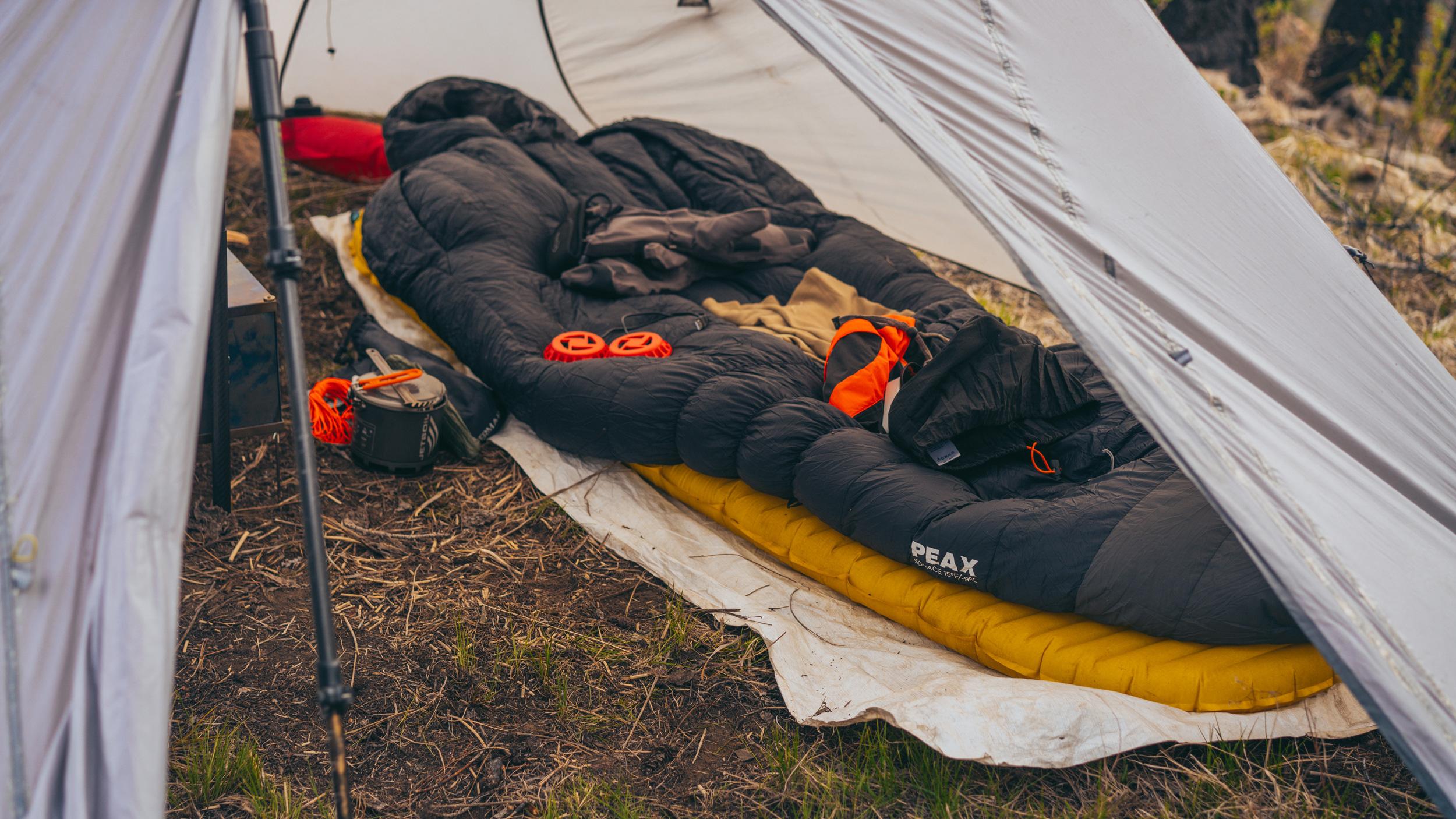
This is an area of my gear list that, once I find what works, I simply just stick to it. I feel that my sleeping system, I have the best of both worlds. I have a sleeping pad that is comfortable, durable, and provides a decent R-value with the Therm-A-Rest NeoAir XLite. I don’t need a sleeping pad with a ton of extra R-value during these later season hunts, as 99% of the time I’ll have a shelter with a stove in it. And while this sleeping pad is light, I definitely put durability in there for a reason.
One thing I’ll note is that to save a bit of weight, I opted for the regular size sleeping pad rather than the long one, if I'm trying to save a little weight. Even though I’m 6’5”, I feel that a regular-length sleeping pad is totally workable for me. I’m not looking for five-star sleeping conditions. I’m a hunter first and foremost, and most know that I’ll do what it takes with gear to shave a few ounces so I can pack the real items that make a difference in the outcome of my hunt.
My sleeping bag of choice is either the PEAX Equipment Solace 15 Degree Sleeping Bag or theStone Glacier Chilkoot 15-degree sleeping bag. Both sleeping bags, in my opinion, are perfect for the style of hunting I do. The weight is kept to a minimum, and both bags have enough room. At my height, I’m at the maximum recommended size the Stone Glacier Chilkoot bags, but I do feel like the sleeping bag still work great for me. The Stone Glacier sleeping bag has been with me on so many hunts!
I've been really enjoying the PEAX Solace sleeping bag more and more the past few years, and if I were to pick one bag right now to buy if I didn't have a sleeping bag, it would be the PEAX Solace. I really like that I this sleeping bag in a tall, is plenty long for me as it fits a person up to 85" (7' 1").
And remember, if I ever get cold on a hunt, I will always add a few more layers of my clothes to sleep in. I carried them on the hunt, so I might as well use them.
Brady's Sleeping Pad Choice For Hunting:
Model: Therm-A-Rest NeoAir XLite (Regular)
Weight: 13 oz
Size: 20” x 72”
Thickness: 3"
R-Value: 4.5
Cost: $209.95
Brady's Sleeping Bag Choices For Hunting:
Model: PEAX Equipment Solace 15 Degree Sleeping Bag (Tall)
Weight: 2 lb. 8.6 oz.
Temperature rating: 15 degrees
Fill power: 850 fill grey goose down
Max user height: 85"
Shoulder girth: 67”
Hip girth: 58”
Foot girth: 45”
Cost: $695
Weight: 2 lb. 3 oz.
Temperature rating: 15 degrees
Fill power: 850+ fill HyperDRY 90/10 Grey Goose Down
Max user height: 77"
Shoulder girth: 64”
Hip girth: 48”
Foot box girth: 36”
Cost: $650
Dave Barnett — September Archery Elk Hunting
Generally speaking, I am a minimalist when it comes to backpack hunting. With archery elk, I love to stay mobile and to maintain the ability to cover ground quickly, and ounces are a big deal for this type of hunting. However, one thing I learned long ago is that I am just an extremely light sleeper. I have trouble falling and staying asleep, and any minor discomfort will exacerbate this issue greatly. So, with that, my sleep system is one area where I’m OK sacrificing a little bit of weight for a big gain in comfort!
For my sleeping pad, I really like the Big Agnes Rapide SL insulated. The 3.5” thick pad provides exceptional insulation and comfort, while the 4.25” outer chambers keep me on the pad when I’m restless. I tend to sleep really cold, so I generally opt for a 15-degree bag for all of my hunts. The Marmot Helium 15 degree is my go-to and has been for the past several years. With this bag, I still have plenty of room to move around. I’m a side sleeper, and I don’t feel like I’m getting twisted into a mess.
Dave's Sleeping Pad Choice For Hunting:
Model: Big Agnes Rapide SL Insulated Sleeping Pad (Regular)
Weight: 1 lb 2 oz
Size: 20” x 72”
Thickness: 3.5" with 4.25" outer chamber
R-Value: 4.8
Cost: $149.95
Dave's Sleeping Bag Choice For Hunting:
Model: Marmot Helium 15 Degree Down Sleeping Bag (Regular)
Weight: 2 lbs 2.7 oz
Temperature rating: 15 degrees
Max user height: 72"
Shoulder girth: 61”
Hip girth: 56”
Foot box girth: 39”
Cost: $479
Friend of GOHUNT, Chris Neville, September to November Elk Hunting
Having a good sleep system is something that I think is crucial, and every hunter should invest in a good backcountry sleep system! One thing I think that isn't talked about enough is how important it is to be well-rested on a hunt and how those benefits lead to having more success. If you get better sleep at night, you will feel better the next day, your body will recover quicker, and mentally, you'll be sharper and more motivated to hunt harder. These factors will lead to having a much more enjoyable hunt.
I have tried and used multiple sleeping pads and sleeping bags over the years. My goal with my sleeping setup is to try and find the most comfortable setup possible, that is fairly lightweight and something that is versatile enough that I can use year-round.
The best combination that I have found that meets those needs is the Stone Glacier Chilkoot 15-degree sleeping bag, Therm-A-rest NeoAir XLite Sleeping Pad, and the Klymit XL Pillow.
Now let’s dive into the details behind why I think this is the best sleep system. For my sleeping bag, I have found that the 15 to 20 degree range for sleeping bags is great for versatility, as it can be used from August all the way through November. For those earlier seasons, you can keep it unzipped and sleep comfortably. For later seasons, you can wear your down clothes to bed to add extra warmth and sleep comfortably. One other thing to note about the Stone Glacier Chilkoot sleeping bag is that it's very roomy from the waist up, allowing you to sleep in a lot of different positions, which I absolutely love!
Now to my sleeping pad. I have punctured my fair share, mostly due to going ultralight weight, and the materials not being as durable. The Therm-A-Rest NeoAir Xlite has a 4.5 R-value, which lends to being made of thicker materials, giving it more durability, and it's good to use any time of the year, no matter the temperature. Last but not least, the Klymit Pillow XL is a must-have. In reality, any camp pillow will work as long as you have a dedicated pillow. It will significantly improve your sleep, and it weighs next to nothing! Stop using your down clothes and get a camp pillow. You will thank me later.
I highly recommend that everyone look into upgrading their sleep system if they haven't already, and hopefully get better sleep on the mountain this fall, leading to a more successful hunt!
Chris's Sleeping Pad Choice For Hunting:
Model: Therm-A-Rest NeoAir XLite (Long)
Weight: 1 lb 1 oz
Size: 25” x 77”
Thickness: 3"
R-Value: 4.5
Cost: $239.95
Chris's Sleeping Bag Choice For Hunting:
Weight: 2 lb. 3 oz.
Temperature rating: 15 degrees
Fill power: 850+ fill HyperDRY 90/10 Grey Goose Down
Max user height: 77"
Shoulder girth: 64”
Hip Girth: 48”
Foot Box Girth: 36”
Cost: $650

Sleeping bags and sleeping pads are two of the most critical—but often overlooked—parts of a successful backcountry hunt. Hopefully, this article will provide you with ideas on what has worked for us, what hasn’t, and how to find the perfect balance between comfort, weight, and performance. Whether you're a seasoned backcountry hunter or just getting started, this is the area of gear you don't want to sleep on.
This article was originally published on August 26, 2022, and has been updated with more information.